Fantasy cricket selection requires comparative analysis of form trajectories, tactical alignments, and venue-specific advantages.
The second match presents contrasting team profiles with distinct strengths across batting depth and bowling variety.
Decision-making for the IND vs NZ 2nd T20I Dream11 prediction today match on 23 Jan 2026 involves assessing momentum shifts from the opening encounter.
Recent performance data reveals clear patterns in powerplay approach, spin utilization, and death-overs execution.
IND vs NZ 2nd T20I Dream11 Prediction Today Match
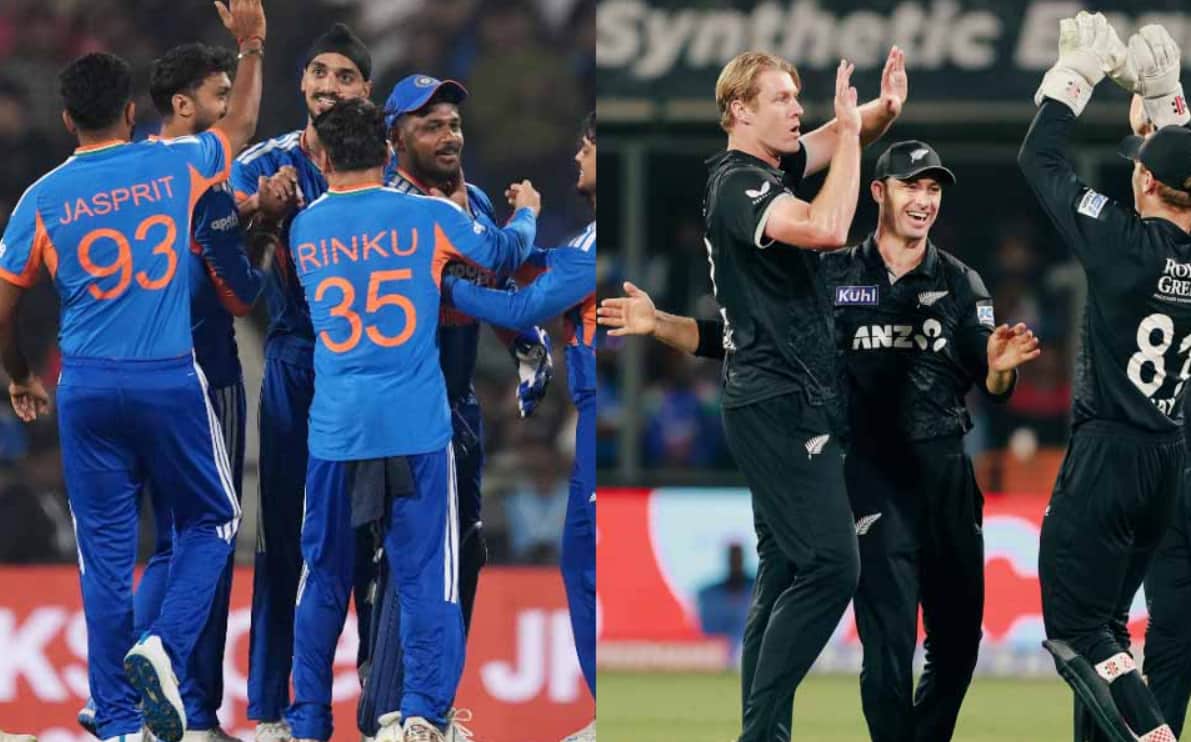
This analytical breakdown provides matchup comparisons, historical context, and risk-reward frameworks for fantasy team construction.
Match Overview at a Glance
| Fixture | Match Number | Date | Start Time | Venue |
|---|---|---|---|---|
| India vs New Zealand | 2nd T20I of 5 | 23 January 2026 (Friday) | 7:00 PM IST | Shaheed Veer Narayan Singh International Stadium, Raipur |
Series Momentum Comparison
| Factor | India | New Zealand |
|---|---|---|
| Recent Form | Won 1st T20I by 48 runs. Top-order firing with Abhishek (84 off 35). Middle-order stable. | Lost by 48 runs. Glenn Phillips (78 off 40) showed resistance. Bowling leaked 213 runs. |
| Confidence Level | High. Dominant batting display. Spinners effective in middle overs. Home conditions suit. | Moderate. Batting competitive but bowling exposed. Need wickets in powerplay to control games. |
| Squad Stability | Two changes (Tilak Varma, Washington Sundar out). Replacements available but untested in series. | Full squad available. No injury concerns. Team combination unchanged from 1st T20I. |
| Match Adaptability | Flexible batting order. Multiple bowling options. Experienced in high-scoring scenarios. | Limited bowling depth. Dependent on top 3-4 batters. Struggle against spin in middle overs. |
India hold clear momentum advantage with series lead. New Zealand need tactical adjustments in bowling strategy and middle-overs batting approach.
Tactical Context
- Powerplay dominance: India scored 73/1 in first 6 overs during 1st T20I. Abhishek Sharma’s aggressive approach set match tempo. New Zealand managed 48/2, indicating defensive start. Powerplay advantage creates pressure differential.
- Middle-overs control: Varun Chakravarthy and Axar Patel restricted New Zealand to 65 runs between overs 7-15. Indian batters accelerated freely in same phase. Spin bowling quality creates tactical gap favoring home side.
- Death-overs efficiency: India scored 89 runs in final 5 overs with minimal wickets lost. New Zealand collapsed under scoreboard pressure, losing 5 wickets for 52 runs. Finishing ability separates teams in high-scoring situations.
- Bowling variety utilization: India used 7 bowling options including part-timers. New Zealand relied heavily on 5 frontline bowlers. Rotation flexibility helps maintain pressure and manage workload across 20 overs.
- Batting depth comparison: India batted down to number 7 with contributions from Rinku Singh (44 off 20). New Zealand’s lower order offered minimal resistance. Depth provides security for aggressive top-order play.
Pitch Behavior vs Playing Styles
| Pitch Aspect | Batters Impact | Bowlers Impact |
|---|---|---|
| Early swing availability | Risk for aggressive openers. Requires careful first 2 overs. Suits technically correct batters. | Advantage for new-ball seamers. Jacob Duffy, Arshdeep Singh can exploit movement. |
| Spin-friendly surface | Favors batters with strong sweep game. Struggles for those reliant on pace. Requires rotation strike. | Major advantage for Varun Chakravarthy, Mitchell Santner. Turn increases after 10 overs. |
| Large boundary dimensions | Penalizes mis-hits. Rewards genuine power-hitters. Requires placement over power in some areas. | Reduces six-hitting frequency. Allows defensive fields. Ground fielding becomes critical. |
| Balanced pace-spin | No single batting approach dominates. Application required before acceleration. Suits versatile players. | All-rounders gain value. Teams need 3 seamers + 3 spinners for balance. |
The IND vs NZ 2nd T20I Dream11 prediction today match requires selecting players who handle spin effectively and clear large boundaries consistently.
Weather Influence on Strategy
| Weather Factor | Match Impact |
|---|---|
| Temperature (15-22°C) | Pleasant conditions favor longer innings. No heat-related fatigue. Fielders remain sharp throughout. |
| Dew Factor | Expected in the second innings. Ball becomes slippery for bowlers. Chasing teams gain an advantage after 15 overs. |
| Wind Speed | Light breeze assists swing bowling early. Minimal impact on ball trajectory. No strategic adjustments needed. |
| Humidity Level | Low to moderate keeps the wicket dry initially. The arrival timing becomes crucial for captains at the toss. |
Dew impact favors chasing teams. Captains winning the toss face a decision between setting a target or exploiting second-innings conditions.
Squad Availability & Impact
- India – Tilak Varma absence: Middle-order depth reduced with Tilak’s surgery ruling him out. Shreyas Iyer’s replacement provides experience but lacks current match practice. Rinku Singh’s role becomes more critical as the primary finisher.
- India – Washington Sundar unavailable: All-rounder option missing creates bowling combination questions. Ravi Bishnoi adds leg-spin variety but offers no batting depth. Hardik Pandya carries increased all-round responsibility.
- New Zealand – Full squad fitness: A complete roster available gives selection flexibility. Tim Southee’s experience could return if management seeks bowling changes. No forced alterations allow tactical experimentation.
Historical Matchup Snapshot (T20Is)
| Metric | Record |
|---|---|
| Total matches played | 26 (including 1st T20I of current series) |
| India victories | 15 (57.7% win rate) |
| New Zealand victories | 10 |
| Tied matches | 1 |
| India wins in India | 9 out of 12 home matches |
| Average margin (India wins) | 34 runs or 4.2 wickets |
| Average margin (NZ wins) | 22 runs or 3.8 wickets |
Bilateral Series Trends
- Home advantage dominance: India has won 9 of 12 T20Is played on home soil against New Zealand. Home conditions amplify spin bowling strength and crowd support factor.
- Margin patterns reveal quality gaps: India’s average winning margin (34 runs/4.2 wickets) exceeds New Zealand’s (22 runs/3.8 wickets). Larger margins indicate superior team balance and finishing ability.
- Series-clinching tendency: India has sealed 4 of their 5 series wins before the final match. Early momentum was converted into series victories consistently across different years.
- New Zealand’s away struggles: New Zealand won only 3 of 12 T20Is in India. Inability to adapt to spinning conditions and handle pressure situations limits the success rate.
Recent Encounters – What Changed?
- 1st T20I, 21 January 2026 – India won by 48 runs:
Abhishek Sharma’s explosive 84 off 35 balls changed powerplay dynamics. Indian openers attacked from first over. New Zealand lacked similar intent, falling behind early in chase.
- India won by 168 runs, 1 February 2023]:
Record margin victory exposed New Zealand’s collapse against quality spin bowling. Middle-order batting fragility became evident when chasing large totals under pressure.
- India won by 6 wickets, 29 January 2023:
Close finish showed New Zealand’s competitive bowling but an inadequate total. Death-overs batting depth differential determined outcome despite tight contest.
- New Zealand won by 21 runs, 27 January 2023:
New Zealand’s only series win came with disciplined bowling. Defensive total successfully defended showed alternative approach can work occasionally.
- Tied match (DLS), 22 November 2022:
Rain intervention prevented result in T20 World Cup. Both teams showed balanced performance before weather interruption affected calculations.
Fantasy Comparison – Key Player Matchups
| Player A | Player B | Advantage Factor |
|---|---|---|
| Abhishek Sharma (IND) | Finn Allen (NZ) | Abhishek: Strike rate 240 in 1st T20I vs Finn’s 120. Power-hitting ability on large boundaries favors Abhishek. |
| Varun Chakravarthy (IND) | Mitchell Santner (NZ) | Varun: World No. 1 ranking, 2/37 in 1st T20I. Santner managed 1/44. Mystery spin creates wicket-taking edge. |
| Glenn Phillips (NZ) | Suryakumar Yadav (IND) | Phillips: Current form superior (78 vs 32 in 1st T20I). SKY searching rhythm before World Cup. Phillips offers safer pick. |
| Hardik Pandya (IND) | Rachin Ravindra (NZ) | Hardik: Genuine all-round impact (25 runs, 1 wicket). Rachin managed 10 runs, no wickets. Balance favors Hardik clearly. |
| Rinku Singh (IND) | Mark Chapman (NZ) | Rinku: Explosive finishing (44 off 20). Chapman’s 4 off 5 shows a struggle. Lower-order fantasy points lean heavily toward Rinku. |
Direct matchups highlight India’s depth advantage across batting positions and bowling variety. The IND vs NZ 2nd T20I Dream11 prediction requires selecting players with proven form over reputation alone.
Venue Impact on Fantasy Scoring
- Boundary dimensions favor power-hitters: Straight boundaries reaching 81 meters require genuine clearing ability. Players like Abhishek Sharma, Glenn Phillips with six-hitting range gain premium value. Ground shots yield fewer fantasy points.
- Spin-friendly surface boosts specialist bowlers: Varun Chakravarthy, Mitchell Santner, Axar Patel become high-value picks. Pitch offering turn increases wicket-taking probability. Economy rates remain manageable with defensive fields possible.
- Large ground reduces mis-hit sixes: Fantasy scoring from boundaries decreases for technically weaker batters. Players relying on top-edges or mis-timed shots struggle. Clean strikers maintain advantage throughout innings.
- All-rounder premium increases: Balanced pitch conditions create opportunities for genuine all-rounders. Players offering 30+ runs and 1-2 wickets provide double fantasy points. Hardik Pandya, Rachin Ravindra gain selection priority.
- Average fantasy points trend lower: Moderate scoring pitch (160-175 average) reduces explosive innings frequency. Captain/vice-captain choices require careful assessment. Form over reputation becomes selection principle for the IND vs NZ 2nd T20I Dream11 prediction today match.
Conclusion:
Fantasy team construction for the IND vs NZ 2nd T20I Dream11 prediction today match on 23 Jan 2026 demands form-based selections over historical reputation.
Abhishek Sharma’s explosive batting and Varun Chakravarthy’s wicket-taking ability offer essential captain options.
Matchup analysis reveals India’s superior balance across batting depth and bowling variety. New Zealand’s dependence on top-order batting creates risk concentration.
Venue characteristics favor spin bowlers and genuine power-hitters.
The dew factor in the second innings could neutralize bowling advantages. Large boundaries reduce six-hitting frequency, emphasizing strike rotation and placement over raw power.
- Decision framework cues
Select 6-7 Indian players given home advantage and current momentum. Include Glenn Phillips from New Zealand for batting reliability. Prioritize Varun Chakravarthy and Rinku Singh as differential captaincy options.
- Risk assessment
Avoid New Zealand bowlers except Jacob Duffy who showed economy control. Balance wicketkeeper choices between consistency and explosive potential. All-rounders provide safety against single-dimensional performances.
About the Author