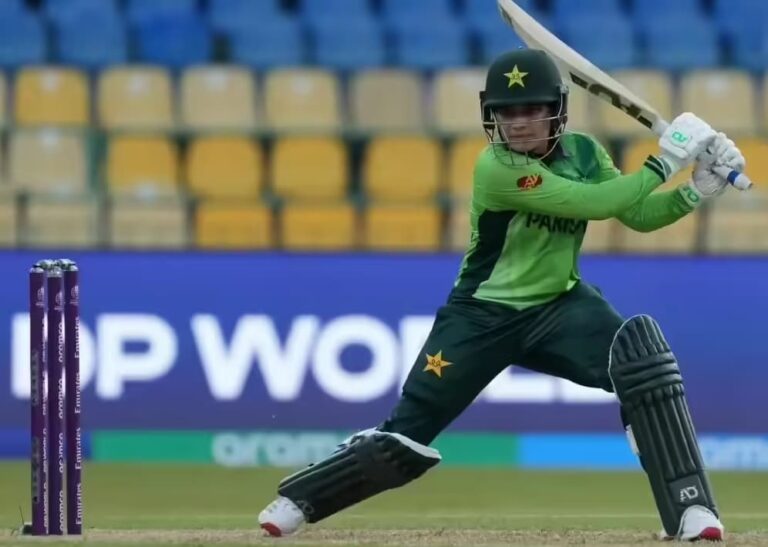
Spin-friendly and two-paced wickets across India and Sri Lanka have fundamentally altered how batters approach boundary-hitting at this tournament.
Clearing the rope consistently has become difficult, with cross-bat slog shots failing far more often than they do on flat decks.
In response, technically strong stroke-makers who rely on timing, placement, and controlled execution have emerged as the most effective boundary-scorers.
Controlled four-hitting through gaps — rather than aerial sixes — has defined the batting patterns at this edition.
Batsmen with Most Fours in T20 World Cup 2026
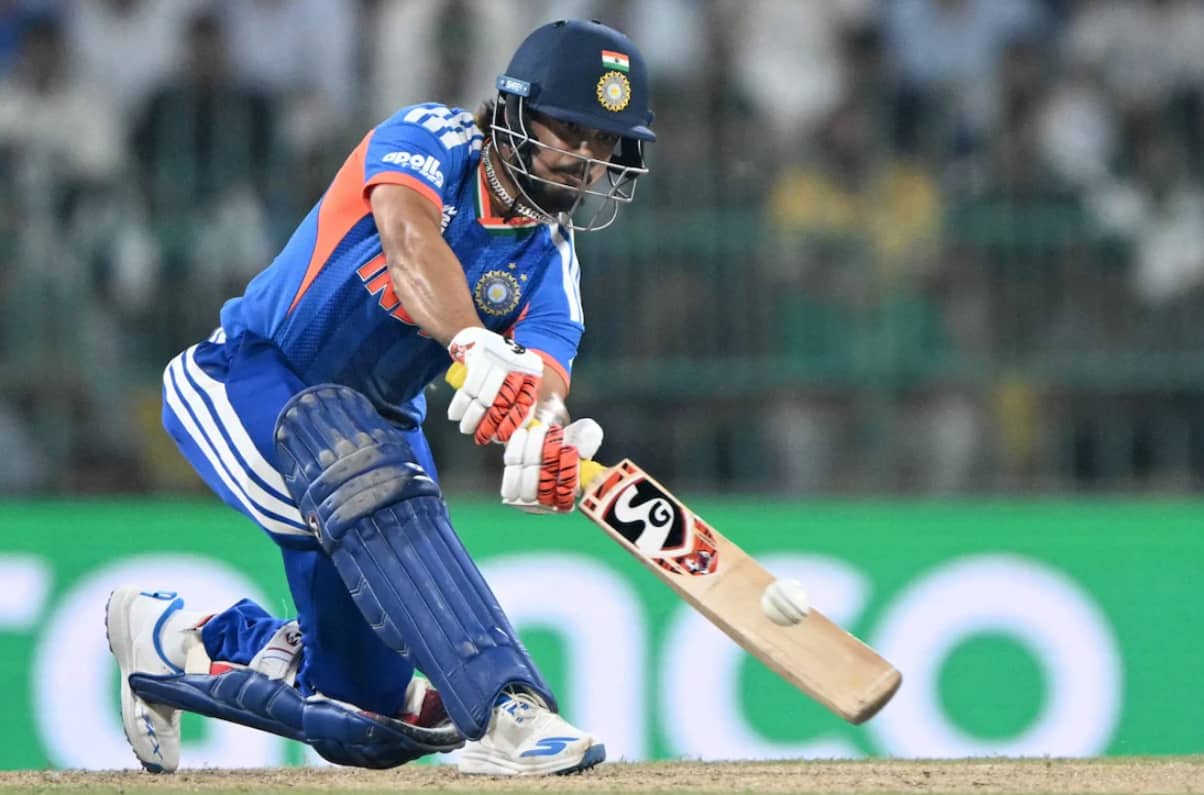
The batsmen with most fours in T20 World Cup 2026 reflect exactly this shift toward precision-based batting.
Top 5 Batsmen with Most Fours in T20 World Cup 2026
| Rank | Player | Team | Matches | Total Runs | Fours | Strike Rate |
|---|---|---|---|---|---|---|
| 1 | Tim Seifert | New Zealand | 2 | 154* | 21 | 175+ |
| 2 | Aiden Markram | South Africa | 2 | 140+ | 19 | 165+ |
| 3 | Kusal Mendis | Sri Lanka | 3 | 170+ | 18 | 150+ |
| 4 | Ishan Kishan | India | 2 | 138 | 17 | 160+ |
| 5 | George Munsey | Scotland | 3 | 100+ | 17 | 140+ |
On slow surfaces where the ball grips and skids unpredictably, sixes demand near-perfect timing and carry genuine risk of miscuing.
Fours hit along the ground through covers, square leg, and mid-wicket require less brute force and offer a far higher success rate.
The batsmen with most fours in T20 World Cup have repeatedly demonstrated that reading length early and exploiting gaps consistently is the most reliable scoring method under these conditions.
Strike rotation combined with well-timed boundary-hitting has emerged as the dominant scoring pattern of this tournament.
Batters who manipulate the field intelligently, find gaps with placement, and accelerate through fours rather than sixes are controlling match tempo and building totals that spinners can then defend effectively.
All Batsmen with the Most Fours in the T20 World Cup 2026
- Tim Seifert (New Zealand) – 21 Fours
Seifert produced 65 off 42 balls against Afghanistan in Chennai, steadying New Zealand after two early wickets and attacking the spinners through square boundaries from the outset. He then delivered an unbeaten 89 against the UAE, using his compact technique to punish width and length with crisp drives and cuts. His ability to target the square region on both sides of the wicket has made him particularly effective on slower tracks. These qualities are precisely why he leads the batsmen with most fours in ICC T20 World Cup at this stage.
- Aiden Markram (South Africa) – 19 Fours
The Proteas captain struck 10 boundaries against Canada in his opening fixture, setting an aggressive tone and establishing South Africa’s dominance early. He followed that with 8 more fours against New Zealand, showing that his form carries across different opposition and conditions. Markram’s approach combines anchoring responsibility with calculated acceleration — he does not take undue risks but punishes anything loose with precision. His consistency across both matches has been central to South Africa’s unbeaten group stage run.
- Kusal Mendis (Sri Lanka) – 18 Fours
Mendis scored three consecutive fifties across Sri Lanka’s opening group matches, with his boundary-hitting built around the sweep shot and cover drive against spin. His unbeaten 56 and subsequent 61 demonstrated smart placement and patience rather than aggression for its own sake. The knock against Australia proved most significant — his six fours in that match helped Sri Lanka seal Super 8 qualification alongside Pathum Nissanka’s century. His tactical awareness in reading the field and targeting gaps against spin has been consistently impressive.
- Ishan Kishan (India) – 17 Fours
Kishan’s 77 off 40 balls against Pakistan on a tacky pitch was his defining contribution — 10 of his 17 fours came in that single match, with most arriving through well-timed drives and flicks rather than aerial shots. His 61 against Namibia added six more boundaries, confirming that his powerplay scoring approach has been consistent throughout. The method is high-risk in the sense of intent, but Kishan’s timing keeps the execution controlled and the shot selection precise. His contributions have directly accelerated India’s powerplay totals in both fixtures.
- George Munsey (Scotland) – 17 Fours
Munsey’s 84 off 54 balls against Italy was one of the tournament’s most dominant associate-team innings, with 13 of his 17 fours arriving in that single match. He drove, cut, and pulled his way through the Italian attack with authority, carrying Scotland’s batting unit on his own. Against stronger sides like the West Indies and England, however, he managed just four combined boundaries, exposing the gap between his performances against associate and full-member attacks. Scotland’s top-order structure relies heavily on Munsey providing an early burst, and when he fails, the team struggles to build totals.
The performances above confirm that the batsmen with most fours in T20 World Cup 2026 are not simply big-hitters — they are technically equipped, tactically aware stroke-makers who have mastered the art of batting on difficult surfaces.
Conclusion:
The T20 World Cup 2026 has rewarded precision over power at every stage of the group phase.
The batsmen with most fours in the T20 World Cup 2026 — Seifert, Markram, Mendis, Kishan, and Munsey — share a common quality: the ability to adapt technique to conditions and score boundaries without compromising their wicket unnecessarily.
As the Super 8 stage approaches, batters who can replicate this controlled approach on unfamiliar surfaces will hold decisive influence.
The tournament has already demonstrated that technical excellence separates match-winners from one-innings contributors.
- Slow wickets reduced six-hitting and made ground-level boundaries the primary scoring tool
- Precision shot-making dominated as batters prioritised placement over aerial power
- Associate teams showed fight, with Munsey proving competitive at this level
- Top-order batters carried teams, with boundary-scoring concentrated in openers and No. 3s
- Super 8 race tightening, with in-form batters set to become even more decisive
Also Check:
- Most Expensive Five-Wicket Hauls in T20I Cricket
- Most Wins for Associate Teams in the T20 World Cup
- Most Expensive Players in WPL History
- Most Stumpings By A Wicketkeeper in Test Cricket
- Most Sixes by a Team in a T20I Innings
About the Author