The richest cricket umpires in the world 2026 represent a financial elite within international cricket’s officiating hierarchy.
Modern umpires combine ICC retainers, international match fees, and lucrative franchise league contracts to build substantial wealth portfolios.
Beyond traditional match-day earnings, elite officials invest in plantations, real estate, cricket academies, and consultancy ventures.
The IPL remains the primary wealth accelerator, with top-tier umpires earning nearly 40% of their annual income during the concentrated two-month tournament window.
This financial ecosystem reflects the professionalization of cricket officiating, where consistency, seniority, and strategic investment diversification determine long-term wealth accumulation.
Richest Cricket Umpires In The World 2026
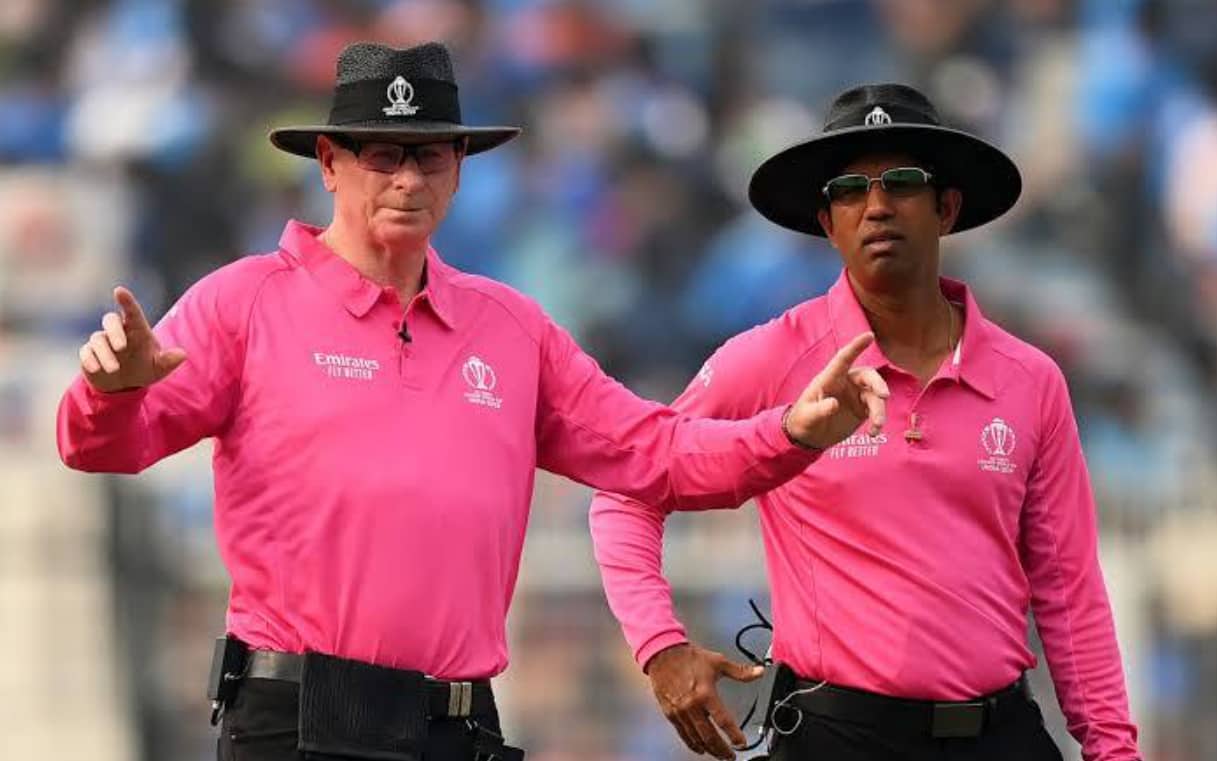
From agricultural enterprises to property holdings, today’s umpires build legacies extending far beyond their on-field careers.
Top 10 Richest Cricket Umpires In The World 2026
The Top 10 Richest Cricket Umpires In The World combine decades of ICC earnings with private business ventures, creating multi-million dollar portfolios.
These rankings reflect cumulative wealth from officiating income, league contracts, and strategic investments across diverse sectors.
| Rank | Umpire | Country | Panel Status | Estimated Net Worth (2026) |
|---|---|---|---|---|
| 1 | Kumar Dharmasena | Sri Lanka | ICC Elite | $18M |
| 2 | Nitin Menon | India | ICC Elite | $2.5M |
| 3 | Richard Kettleborough | England | ICC Elite | $4M |
| 4 | Aleem Dar | Pakistan | Former Elite | $4M |
| 5 | Rod Tucker | Australia | ICC Elite | $3.5M |
| 6 | Richard Illingworth | England | ICC Elite | $3.5M |
| 7 | Christopher Gaffaney | New Zealand | ICC Elite | $2.5M |
| 8 | Marais Erasmus | South Africa | Retired Elite | $2M |
| 9 | Paul Reiffel | Australia | ICC Elite | $2M |
| 10 | Ian Gould | England | Retired | $1.5M |
Earnings Options for Cricket Umpires
- ICC Elite Panel Retainer: Elite panel members receive annual base salaries ranging from $100,000 to $200,000, with contract upgrades based on performance, seniority, and consistency. These guaranteed retainers provide financial stability independent of match assignment frequency throughout the calendar year.
- International Match Compensation: Test cricket commands $5,000 per match, ODIs fetch $3,000, and T20 Internationals pay $1,500 per fixture. Top officials officiating 8-10 Tests and 15+ limited-overs games annually accumulate nearly $100,000 through match fees alone, supplementing their base retainers substantially.
- Franchise League Contracts: The IPL dominates compensation with ₹3 lakh per match, while ILT20, BBL, MLC, SA20, PSL, and The Hundred offer $1,300-$2,500 per game. These concentrated tournaments contribute 40-50% of annual income during short windows, creating massive earning acceleration for elite officials.
- Commercial & Branding Revenue: Umpires earn passive income through sleeve logo sponsorships during major tournaments, with IPL distributing ₹7.3 lakh per season among officials. Daily allowances of ₹12,500 plus business-class travel and premium accommodation create additional value beyond direct match compensation structures.
- Post-Retirement Income Streams: Successful umpires transition into commentary roles, cricket academy ownership, consultancy positions, and broadcast analysis. These ventures maintain substantial income flows after active officiating careers conclude, demonstrating how elite officials leverage expertise into sustainable long-term revenue models.
ICC Annual Retainer Salary for Umpires
The ICC operates three distinct umpire panels with tiered compensation reflecting seniority and assignment priority.
Elite panel members receive the highest retainers, ensuring their availability for major tournaments and bilateral series worldwide throughout each calendar year.
| ICC Panel | Base Salary (USD) | Approx INR | Contract Nature |
|---|---|---|---|
| Elite Panel | $100K – $200K | ₹85L – ₹1.7Cr | Full-Time Global |
| International Panel | $35K – $45K | ₹30L – ₹38L | Partly Board-Supported |
| Development Panel | ~$15K | ₹12L+ | Match-Based |
Match Fees for Umpires
Match fees vary significantly by format, with Test cricket commanding the highest per-game compensation reflecting the extended duration and concentrated demands.
Officials accumulate substantial annual income through consistent international assignments across all three formats during the cricket calendar.
| Format | Per Match (USD) | Per Match (INR Approx.) | Average Matches Per Year |
|---|---|---|---|
| Test | $5,000 | ₹4.2L | 8–10 |
| ODI | $3,000 | ₹2.5L | 10–15 |
| T20I | $1,500 | ₹1.26L | 10+ |
T20 League Contracts for Umpires
Franchise T20 leagues provide the most lucrative short-term income opportunities for elite cricket umpires globally.
The IPL dominates compensation scales with match fees nearly double those of competing leagues, alongside substantial daily allowances, premium accommodation, and sponsorship pool distributions.
Global T20 League Umpire Fees (2026)
| League | Match Fee USD | Approx INR | Additional Benefits |
|---|---|---|---|
| IPL | $3,650 | ₹3L+ | Sponsorship Share + Allowances |
| ILT20 | $2,500 | ₹2.1L | Tax-Free Earnings |
| BBL | $1,700 | ₹1.45L | Premium Travel |
| SA20 | $1,850 | ₹1.55L | Full Accommodation |
| PSL | $1,500 | ₹1.25L | Performance Bonus |
| MLC | $2,000 | ₹1.7L | Daily Allowance |
| The Hundred | $1,300 | ₹1.1L | Sponsor Pool Share |
Top 10 Richest Cricket Umpires in the World
1. Kumar Dharmasena: The Plantation King (Net Worth: ~$18M)
Kumar Dharmasena’s wealth stems primarily from Pintanna Plantations, his 1,800-acre Agarwood enterprise producing luxury perfume raw materials. His ICC Elite Panel tenure since 2011 includes multiple World Cup final appointments, yet his agricultural empire dwarfs officiating income. This diversification strategy positions him as cricket’s wealthiest umpire by an extraordinary margin through industrial-scale investments.
2. Nitin Menon: India’s Elite Official (~$2.5M)
As India’s sole ICC Elite Panel representative, Nitin Menon maximizes earnings through BCCI’s A+ category retainer combined with ICC contracts. Frequent IPL appointments and high-profile home series ensure consistent match fee accumulation. His young age opens endorsement opportunities and consultancy roles, establishing him as India’s wealthiest active cricket umpire with expanding income diversification.
3. Richard Kettleborough: The Precision Specialist (~$4M)
Richard Kettleborough’s three consecutive ICC Umpire of the Year awards (2013-2015) secured top-tier retainer status since joining the Elite Panel in 2011. His appointment priority for ICC tournament finals maximizes annual match fee earnings consistently. Combined with strategic UK property investments, Kettleborough represents Europe’s wealthiest cricket official through performance excellence, translating into enhanced compensation.
4. Aleem Dar: The Record Holder (~$4M)
Aleem Dar’s two-decade Elite Panel career generated over $2.5 million through his record 440+ international match officiations before transitioning away from the panel. His cumulative match fees reflect unprecedented longevity at cricket’s highest officiating level. Post-retirement, he operates the Aleem Dar Cricket Academy alongside substantial Pakistani real estate holdings.
5. Rod Tucker: The Australian Veteran (~$3.5M)
Rod Tucker’s decade-long professional playing career with NSW and Tasmania provided a financial foundation and pension structures unavailable to non-player umpires. Since joining the Elite Panel in 2010, seniority bonuses and frequent BBL and IPL appointments have added approximately $100,000 annually. This dual-income background positions Tucker among cricket’s wealthiest officials.
6. Richard Illingworth: The Dual-Career Expert (~$3.5M)
Richard Illingworth leverages his former England playing career alongside Elite Panel earnings, drawing from ECB veteran benefits and ICC contracts simultaneously. Multiple World Cup final appointments ensure maximum match fee accumulation throughout his officiating tenure. This dual-income status creates revenue streams unavailable to career umpires without professional playing backgrounds.
7. Christopher Gaffaney: The Business Professional (~$2.5M)
Christopher Gaffaney diversifies wealth through business interests in New Zealand’s Otago region alongside Elite Panel compensation. His IPL contracts contribute significantly to annual income, while consultancy roles with sports officiating technology companies provide additional revenue streams. Gaffaney’s business acumen creates multiple income channels beyond traditional umpiring compensation.
8. Marais Erasmus: The Consulting Specialist (~$2M)
Following his 2024 retirement from international officiating, Marais Erasmus transitioned into lucrative Cricket South Africa consultancy positions. His three ICC Umpire of the Year awards enabled maximum daily rate commands during peak career years. Current broadcast analysis roles maintain substantial income, proving that elite umpires sustain high earnings post-retirement.
9. Paul Reiffel: The World Cup Champion (~$2M)
Paul Reiffel’s World Cup-winning bowling career with Australia provided a financial foundation before his Elite Panel umpiring tenure commenced. His player background ensures priority selection for high-pressure Test matches, commanding $5,000 per game. Combined with Australian real estate investments, Reiffel demonstrates how dual-career paths create substantial net worth.
10. Ian Gould: The Longevity Expert (~$1.5M)
Ian Gould’s wealth reflects extended careers across English county cricket playing and subsequent Elite Panel officiating tenure spanning decades. Post-retirement, his autobiography “Gunner” and regular match referee and commentary roles maintain income. His extended multi-tier cricket career created cumulative wealth, sustaining post-active earnings.
FAQs:
- Who is the richest cricket umpire in the world?
Kumar Dharmasena holds this distinction with an estimated $18 million net worth, primarily from his Agarwood plantation business rather than officiating income alone.
- How much do Elite Panel umpires earn annually?
Elite Panel members earn $100,000-$200,000 base retainers plus match fees and league contracts, totaling $300,000-$500,000 annually, depending on assignments.
- What are the richest cricket umpires in the world 2026 earning from the IPL?
Elite IPL umpires receive ₹3 lakh per match plus ₹12,500 daily allowance and ₹7.3 lakh seasonal sponsorship pool share, earning roughly ₹60-80 lakh per season.
- Do umpires earn from commercial endorsements?
Top umpires earn passive income through sleeve logo sponsorships during major tournaments, with distributed sponsorship pools supplementing direct match compensation structures.
- Can umpires build wealth from cricket alone?
While elite officiating provides substantial income, the wealthiest umpires diversify through plantations, property, academies, and consultancy to build multi-million dollar portfolios.
Conclusion:
The richest cricket umpires in the world 2026 demonstrate how elite officiating has evolved into a financially rewarding profession through strategic income diversification and consistent performance.
Base ICC retainers combined with international match fees create stable annual earnings exceeding mid-career athlete compensation.
T20 franchise leagues, particularly the IPL, accelerate wealth accumulation through concentrated high-value contracts during short tournament windows, providing nearly half of annual income.
Beyond active officiating, successful umpires invest in agricultural enterprises, real estate holdings, cricket academies, and consultancy ventures, generating sustainable post-retirement income.
- ICC Retainers: Elite panel members secure $100,000-$200,000 annual base salaries with tiered compensation reflecting performance and seniority across international assignments.
- Match Fees: Test cricket commands $5,000 per game, with ODI and T20I formats providing $3,000 and $1,500, respectively, for consistent international officiating work.
- Franchise Leagues: IPL and global T20 competitions contribute 40-50% of annual income through match fees, daily allowances, and distributed sponsorship pool shares.
- Sponsorship Pools: Sleeve logo arrangements and commercial partnerships provide passive income streams supplementing direct match compensation throughout major tournament windows.
- Investment Models: Plantation ownership, property portfolios, and cricket academy operations create wealth independent of active officiating careers, ensuring financial sustainability.
- Retirement Income: Commentary roles, broadcast analysis positions, and consultancy arrangements maintain substantial earnings after active officiating careers conclude, demonstrating long-term wealth sustainability.
Also Check:
- Richest Cricketers in India
- Richest Cricket Boards in the World
- Richest Cricketer in the World
- Most Expensive Cars Owned By Indian Cricketers
- Indian Cricket Players Salaries 2026
About the Author