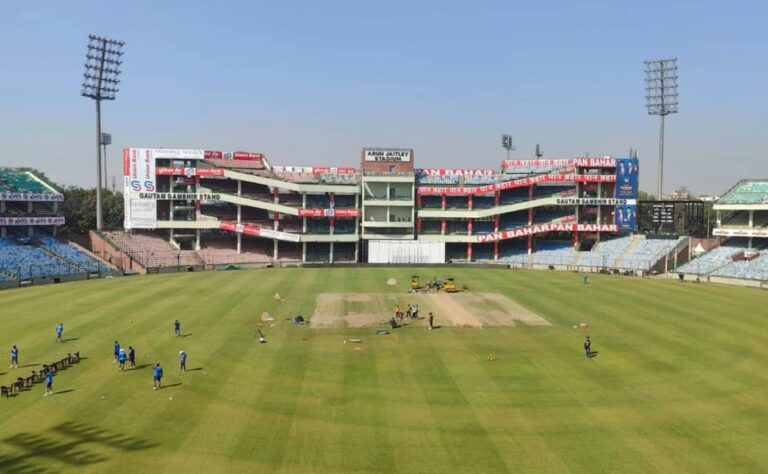
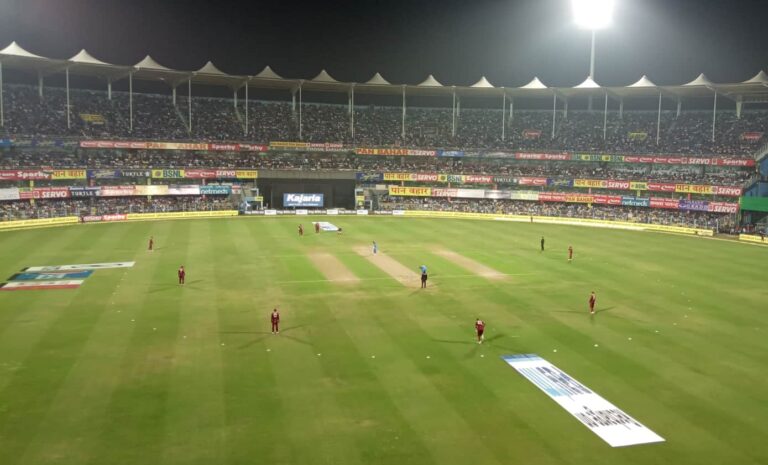
Mumbai’s Wankhede Stadium isn’t just another cricket ground. It’s where India won the 2011 World Cup.
It’s where Sachin Tendulkar played his final Test. It’s where the Mumbai crowd creates an atmosphere that visiting teams fear.
If you’re heading to Wankhede or just want to understand what happens on this pitch, you need to know how it plays. This ground has its own personality.
The Arabian Sea breeze affects swing. The short boundaries favor power hitters. And the pitch? It’s usually kind to batters but rewards smart bowling too.
Wankhede Stadium Pitch Report, Records, and Weather Report Today
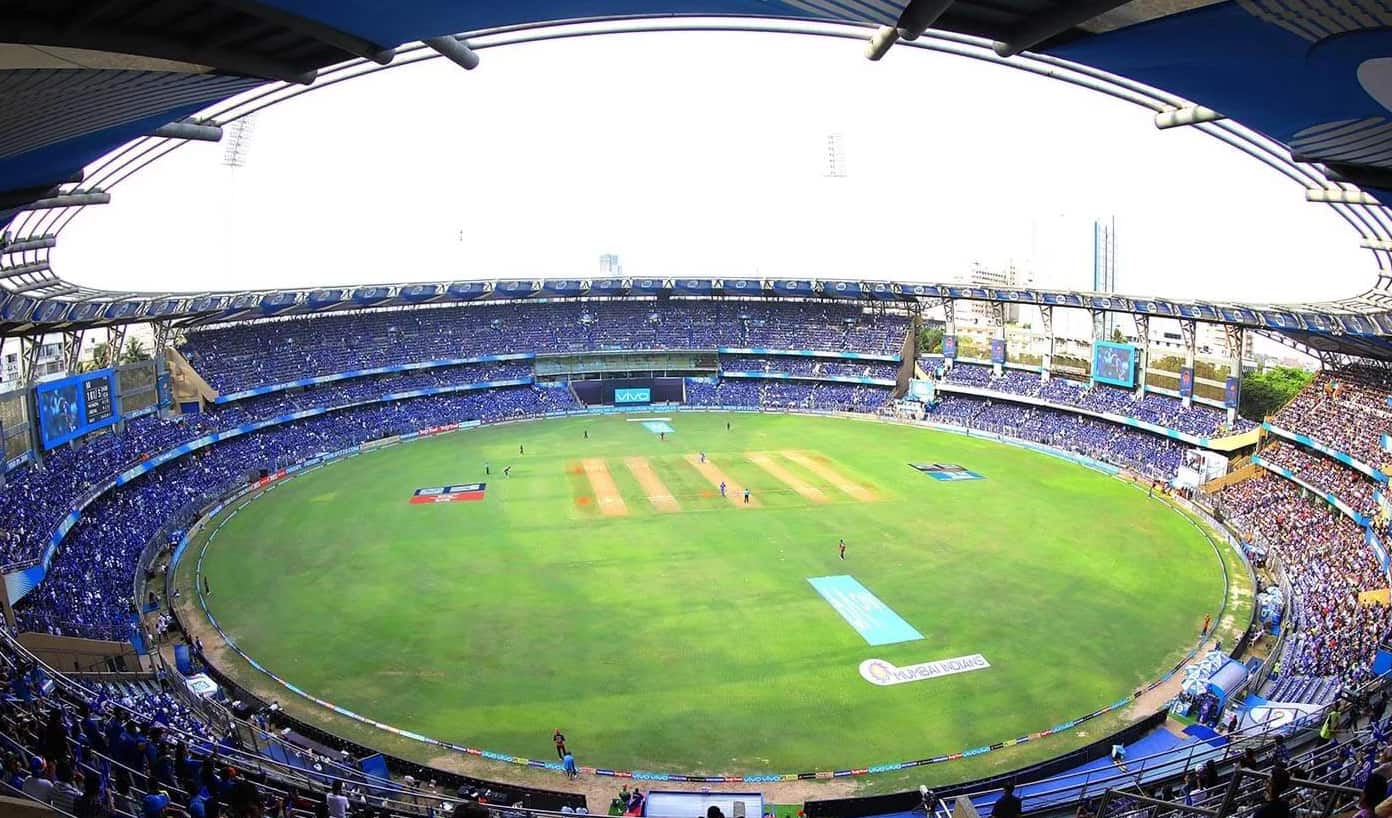
Understanding the Wankhede Stadium Pitch Report
The Wankhede pitch typically favors batters. You’ll see true bounce, fast outfield, and decent carry to the keeper.
Stroke players love it here because the ball comes onto the bat nicely.
But it’s not a one-sided story. Early morning or under lights, seamers get movement.
The sea breeze helps swing bowlers, especially in day-night matches.
Spinners don’t always dominate, but they can slow things down in the middle overs.
The pitch doesn’t break up dramatically in white-ball cricket.
In Tests, it does offer turn-on days four and five. But for T20s and ODIs, expect a surface that stays true throughout.
Wankhede Stadium Pitch Report: Batting or Bowling?

Batting conditions:
- Even bounce helps batters trust the surface
- Short square boundaries make six-hitting easier
- Quick outfield rewards timing
- Scores of 180+ in T20s are common
- ODI scores often cross 300
Bowling conditions:
- New ball swing available early on
- Seamers need variations (slower balls, cutters) to succeed
- Spinners get some grip but won’t run through teams
- Death overs are tough with short boundaries
- Dew in night games makes gripping the ball difficult
The pitch leans toward batting. But bowlers who adapt can still create problems.
Wankhede Stadium Pitch Report: Spin or Fast?
This depends on the match phase and format. In the first 10 overs, fast bowlers have the edge.
The new ball swings, especially under lights. Jasprit Bumrah and Trent Boult have both exploited these conditions.
After the powerplay, spinners come into play. Wrist spinners who toss it up can get a turn.
But finger spinners often struggle unless they’re accurate. The pitch doesn’t spin sharply like Chennai or Kolkata.
In T20s, fast bowlers with yorkers and slower balls are more valuable.
In ODIs and Tests, spinners become useful as the ball gets older.
But overall, pace bowlers get more help than spinners at Wankhede.
Wankhede Stadium T20I Records
T20 cricket at Wankhede is high-scoring entertainment. The short boundaries and flat pitch create perfect conditions for aggressive batting.
| Category | Details |
|---|---|
| First T20I | India vs England – December 22, 2012 |
| Last T20I | India vs England – February 02, 2025 |
| Average First Innings Score | 170-185 runs |
| Highest Team Total | 244/4 by India vs West Indies (2019) |
| Chasing Success Rate | Higher due to the dew factor |
Teams batting second often have an advantage. Dew makes the ball slippery for bowlers. The pitch doesn’t change much in 40 overs. Chasing teams can attack from ball one.
India has a strong record here in T20Is. The home crowd creates pressure on visiting teams. Players like Rohit Sharma and Suryakumar Yadav know exactly where the boundaries are.
Key T20I Performances at Wankhede
- Rohit Sharma’s 118 vs Sri Lanka (2017): Pure timing on a pitch that rewarded stroke play
- KL Rahul’s rapid fifties: Short boundaries suit his hitting areas
- Bumrah’s death bowling: Even on flat pitches, execution wins matches
Complete Records Across All Formats
Wankhede has hosted international cricket since 1975. Here’s what the record books show:
Test Matches:
- First Test: West Indies vs India (January 1975)
- Last Test: New Zealand vs India (November 2024)
- Known for fourth-innings collapses on worn pitches
- Spinners dominate on days four and five
ODI Matches:
- First ODI: India vs Sri Lanka (January 1987)
- Last ODI: India vs New Zealand (November 2023)
- High-scoring venue with 300+ totals common
- Dew plays a bigger role than pitch conditions
Women’s Cricket:
- Hosts Tests, ODIs, and T20Is regularly
- First Women’s Test in 1984
- The recent series against Australia saw competitive cricket
- Women’s T20Is see scores around 150-170
Wankhede Stadium Weather Report Today
The weather at Wankhede changes the game. The Arabian Sea is just a few hundred meters away. This creates unique conditions.
Typical weather patterns:
- Summer (March-May): Hot and humid, temperatures around 30-35°C
- Monsoon (June-September): Matches rarely scheduled, heavy rain risk
- Winter (November-February): Pleasant conditions, 20-28°C, ideal for cricket
- Evening matches: Dew becomes a major factor
The sea breeze picks up in the evening. This helps seamers get swing.
But once dew sets in around 8-9 PM, spinners struggle to grip the ball. Fast bowlers also find it tough to control yorkers.
If you’re watching a match today, check if dew is expected.
Teams winning the toss in night games usually choose to chase.
The pitch doesn’t change, but dew gives a massive advantage.
Why Teams Prefer Chasing at Wankhede?
Ask any captain about Wankhede in a night game, and they’ll tell you: win the toss, bowl first. But why?
The pitch doesn’t deteriorate much in white-ball games. What changes is the ball condition.
Dew makes it wet and slippery. Bowlers can’t grip it properly. Spinners become ineffective. Even yorkers slip out.
Batters, on the other hand, get a clean ball that comes onto the bat. No turn from spinners. No grip for fast bowlers. Just pure hitting conditions.
In IPL 2024, teams chasing at Wankhede won 60% of matches. That’s not luck. That’s understanding conditions.
Wankhede Stadium Pitch Report in Hindi Context
Many Indian fans search for Wankhede pitch information in Hindi. The key points remain the same across languages:
- बल्लेबाजी के लिए अच्छा (Good for batting)
- छोटी बाउंड्री (Short boundaries)
- ओस का प्रभाव (Dew effect)
- समुद्री हवा से स्विंग (Sea breeze creates swing)
The ground’s character doesn’t change based on language. Batters dominate. Dew helps chase teams. Boundaries are short. These facts matter whether you’re reading in English or Hindi.
What Makes Wankhede Special?
Beyond pitch reports and statistics, Wankhede has something intangible. The crowd’s energy is electric. When India bats, every boundary gets a roar. When India bowls, every dot ball builds pressure.
The 2011 World Cup final against Sri Lanka showed what this ground means. MS Dhoni’s six over long-on didn’t just win a match. It created history. That moment is why Wankhede isn’t just a cricket ground. It’s a theater of dreams.
Players who’ve grown up in Mumbai, like Sachin Tendulkar and Rohit Sharma, have special connections here. They know every inch of the outfield. They understand how the pitch plays at different times.
Visiting teams often struggle with the atmosphere. The noise, the expectations, the knowledge that millions are watching create mental pressure that goes beyond pitch conditions.
Frequently Asked Questions
- Is the Wankhede pitch good for batting or bowling?
The pitch favors batting with true bounce and short boundaries. Bowlers can find success early with swing and late with variations, but batters have the edge overall.
- What’s a competitive score in a T20 at Wankhede?
Anything above 180 is competitive. Teams have chased 200+ here, but that requires exceptional batting. Below 160 is usually below par.
- Does the weather affect matches at Wankhede?
Yes, significantly. Dew in night games helps chasing teams. Sea breeze assists swing bowlers early. Hot days make fielding tough, but don’t change the pitch much.
- Why do teams prefer chasing here?
Dew makes the ball slippery for bowlers in the second innings. The pitch doesn’t deteriorate in limited-overs cricket. Chasing teams know the target and can plan their innings.
- How do Wankhede records compare to other Indian venues?
Wankhede produces higher scores than most Indian grounds. Only Chinnaswamy in Bangalore rivals it for batting-friendly conditions. Eden Gardens and Chepauk offer more for bowlers.
Final Thoughts:
Wankhede Stadium offers something for everyone. Batters enjoy the true bounce and short boundaries.
Fast bowlers get early swing. Spinners can be effective with smart bowling. And fans get high-scoring entertainment.
If you’re planning to watch cricket here, expect runs. Expect sixes.
Expect the crowd to be part of the action. And if it’s a night game, expect dew to play a starring role.
The pitch report tells part of the story. The atmosphere, the history, and the pressure of playing in Mumbai tell the rest.
That’s what makes Wankhede one of cricket’s most iconic venues.
Also Check:
About the Author