Karan
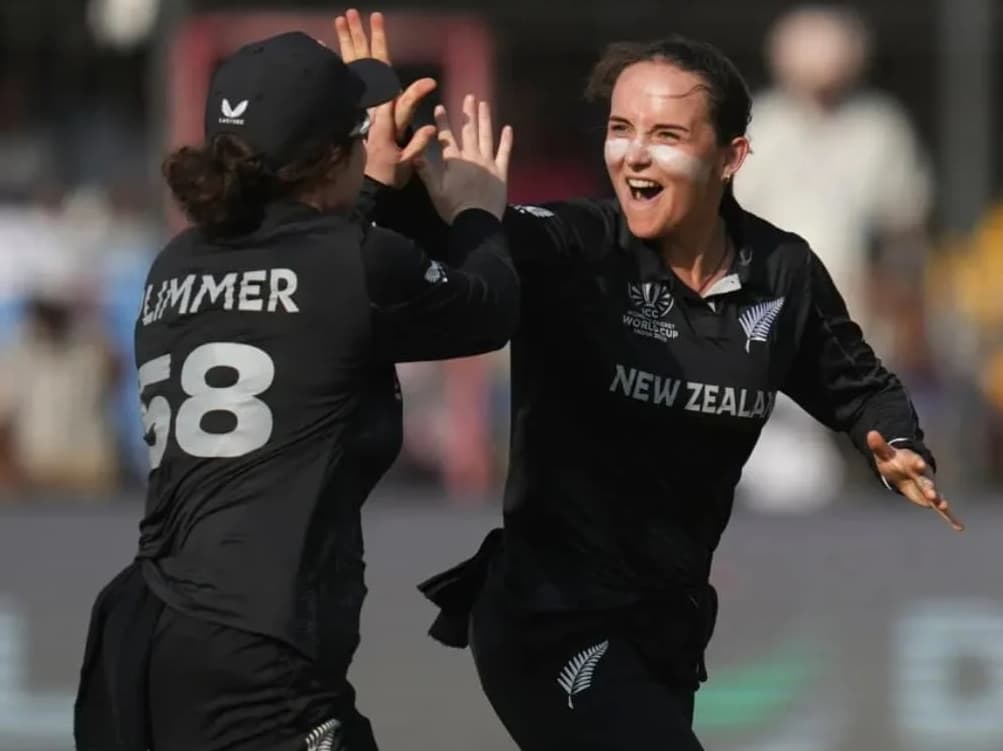
Karan When Amelia Kerr wheeled away in celebration after dismissing Tendai Makusha caught-and-bowled in Dunedin on March 8, 2026, she’d just done something no White Fern had ever managed before.
Seven wickets in a single ODI innings.
The leg-spinner’s figures of 7 for 34 against Zimbabwe Women didn’t just win the match; it rewrote the record books entirely.
Before Kerr’s breakthrough, New Zealand’s women had produced several six-wicket hauls across five decades, but that seventh dismissal had remained frustratingly out of reach.
Her spell combined classical leg-spin craft with modern attacking intent, targeting the stumps relentlessly while varying pace and trajectory.
Zimbabwe collapsed to 102 all out, and Kerr became only the seventh bowler globally to claim a seven-fer in women’s ODIs.
This wasn’t just about numbers.
It was about a player seizing a moment and delivering when her team needed dominance, not just victory.
Best Bowling Figures for New Zealand Women in ODIs
Breaking Down the Record Books: Top Bowling Figures for New Zealand Women
The list of New Zealand’s finest ODI bowling performances reads like a timeline of women’s cricket evolution.
From the early World Cup days of 1973 to the modern professional era, these spells showcase different generations of excellence.
| Bowler | Figures | Opposition | Venue | Year |
|---|---|---|---|---|
| Amelia Kerr | 7/34 | Zimbabwe Women | Dunedin | 2026 |
| Jo Lord | 6/10 | India Women | Auckland | 1982 |
| Glenys Page | 6/20 | Trinidad & Tobago | St Albans | 1973 |
| Aimee Mason McNeill | 6/32 | England Women | Lincoln | 2008 |
| Leigh Kasperek | 6/46 | Australia Women | Mount Maunganui | 2021 |
Amelia Kerr’s Seven-Wicket Masterclass (7/34 vs Zimbabwe, 2026)
Kerr’s spell wasn’t just about the final numbers—it was how she constructed the innings.
Bowling 9.1 overs, she dismissed Chipo Mugeri-Tiripano for just 4 runs before removing the dangerous Modester Mupachikwa, who’d made 32 and looked settled.
The 22nd over proved devastating: Christabel Chatonzwa and Adel Zimunu both departed for golden ducks as Kerr found the perfect length.
After claiming her five-wicket haul by dismissing Nyasha Gwanzura for 3, Kerr equaled New Zealand’s best ODI bowling figures by removing Audrey Mazvishaya for 13.
Then came the historic moment—Makusha’s dismissal gave her the seventh wicket, breaking new ground for White Ferns cricket.
The target of 103 proved laughably simple for New Zealand’s batters.
Jo Lord’s Legendary Economy (6/10 vs India, 1982)
For sheer economy and ruthlessness, Jo Lord’s performance at the 1982 Women’s World Cup remains astonishing.
Defending just 80 runs a target that should’ve been vulnerable—Lord ripped through India’s batting order with 6 for 10 in eight overs.
India collapsed to 37 all out, losing by 43 runs in one of the most lopsided ODI chases ever.
Lord claimed key wickets, including Shanta Rangaswamy and Diana Edulji, both experienced campaigners.
Her spell demonstrated that aggressive bowling could defend any total if executed with precision and relentless pressure.
How Other Formats Compare: Best Bowling Figures Across Women’s Cricket
While ODI cricket demands sustained excellence over 50 overs per side, other formats produce different kinds of bowling brilliance.
Understanding the best bowling figures in ODI women’s cricket globally helps contextualize New Zealand’s achievements.
The world record for best bowling figures in women’s ODI belongs to Australia’s Megan Schutt, who claimed 6 for 19 against Sri Lanka in 2019.
England’s Anya Shrubsole took 6 for 46 in the 2017 World Cup final, a spell under immense pressure that secured the trophy.
Kerr’s 7/34 now surpasses all these as the best bowling figures in ODI women’s category globally.
Best Bowling Figures in T20 Women’s Cricket
T20 cricket’s compressed format makes extreme figures rarer but more explosive.
Bangladesh’s Salma Khatun holds the record with 6 for 10 against Ireland in 2018.
New Zealand’s own Sophie Devine has produced memorable T20 bowling spells, though the format typically rewards batters more generously.
The best bowling figures in T20 internationally show that four or five-wicket hauls are considered exceptional given the reduced overs and aggressive batting approaches.
Women’s World Cup Bowling Performances
The best bowling figures in women’s ODI World Cup history include several match-defining spells.
Shrubsole’s 6/46 in the 2017 final stands out for its timing and pressure. Lord’s 6/10 in 1982 remains one of the most economical World Cup performances ever.
Kerr’s 7/34, while not achieved in a World Cup match, sets a benchmark that future tournament performances will be measured against.
It’s the kind of spell that defines careers and inspires younger players.
New Zealand Women’s Batting Brilliance: A Different Dimension
While this article focuses on bowling excellence, it’s worth noting that New Zealand women’s best batting achievements are equally impressive.
Amelia Kerr herself holds the record for the highest individual score in women’s ODIs—a staggering 232 not out against Ireland in 2018.
Sophie Devine and Suzie Bates have consistently ranked among the world’s premier batters, showing that New Zealand produces all-round talent.
The combination of batting depth and bowling variety makes the White Ferns a formidable opponent in any format.
Understanding Bowling Figures in Test Cricket
The best bowling figures in women’s Test cricket involve different challenges, such as patience, stamina, and adapting to multi-day contests.
Australia’s Betty Wilson claimed 7 for 7 against England in 1958, a figure that remains untouched.
England’s Neetu David took 8 for 53 against England in 1995, showcasing sustained excellence across innings.
Test cricket allows bowlers more time to settle into a rhythm and exploit deteriorating pitches.
New Zealand hasn’t played as much Test cricket historically, but recent renewed focus on the format could produce memorable bowling performances in the coming years.
Expert Insight: Why Kerr’s Performance Stands Apart
What makes Kerr’s 7/34 particularly special isn’t just the numbers; it’s the control she maintained throughout.
Leg-spinners often experience feast-or-famine spells, getting hit when they err slightly.
Kerr conceded just 3.7 runs per over while attacking constantly, a balance that’s exceptionally difficult to achieve.
Her double strike in the 22nd over demonstrated match awareness.
Rather than settling after her initial success, she sensed vulnerability and pressed harder.
That killer instinct separates good performances from historic ones.
The caught-and-bowled dismissal to close out the innings showed physical fitness and commitment, chasing leather off her own bowling to complete the seventh wicket.
Zimbabwe wasn’t a pushover side on paper, making Kerr’s dominance more impressive.
She didn’t just pick up tail-end wickets; she dismantled set batters and broke developing partnerships.
How This Performance Shapes Future Expectations
Kerr’s seven-wicket haul raises the bar for New Zealand bowlers.
It proves that world-class figures are achievable for White Ferns, not just the domain of Australian or English bowlers.
Younger spinners like Fran Jonas and seamers like Lea Tahuhu now have a homegrown benchmark.
The performance also adds pressure.
When Kerr next takes the ball in tight situations, expectations will be sky-high.
Managing that psychological weight while maintaining performance levels defines truly elite athletes.
Her track record suggests she’ll handle it after all, someone who’s scored 232 not out and taken 7 for 34 knows how to deliver under the spotlight.
Frequently Asked Questions
- Who has the best bowling figures for New Zealand women in ODIs all formats?
Amelia Kerr holds the record with 7 for 34 against Zimbabwe Women in 2026, the best by any New Zealand bowler across all women’s formats in ODI cricket.
- What are the overall best bowling figures in ODI women’s cricket worldwide?
Amelia Kerr’s 7/34 is now the best bowling figures in ODI women’s cricket globally, surpassing several six-wicket hauls by other international bowlers.
- Has any New Zealand bowler taken seven wickets in other formats?
No New Zealand women’s bowler has taken seven wickets in T20 internationals. Test cricket records vary, but Kerr’s ODI performance is the benchmark for now.
- How does Jo Lord’s 6/10 compare economically to modern standards?
Lord’s economy rate of 1.25 runs per over remains untouchable by modern standards. It’s one of the most economical five-plus wicket hauls in cricket history.
- Who is considered New Zealand women’s best batsman currently?
Sophie Devine and Amelia Kerr are both considered among the best, with Kerr holding the highest individual ODI score record of 232 not out.
A Performance That Defines Eras
Records exist to be broken, but some performances transcend mere statistics.
Amelia Kerr’s 7 for 34 represents the culmination of skill development, tactical awareness, and mental fortitude.
It’s the kind of spell that young cricketers will watch on replay, trying to decode exactly how she set up each dismissal.
For New Zealand women’s cricket, it’s validation that their systems produce world-class match-winners.
For Kerr personally, it’s another chapter in an already remarkable career.
And for fans of leg-spin bowling everywhere, it’s a reminder that the art form remains cricket’s most captivating theatre, unpredictable, demanding, and occasionally capable of producing absolute magic on a Sunday afternoon in Dunedin.
Also Check:
About the Author