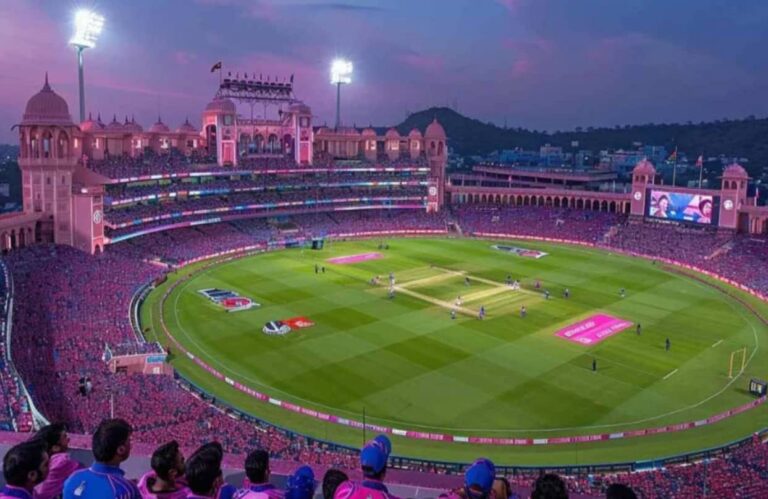
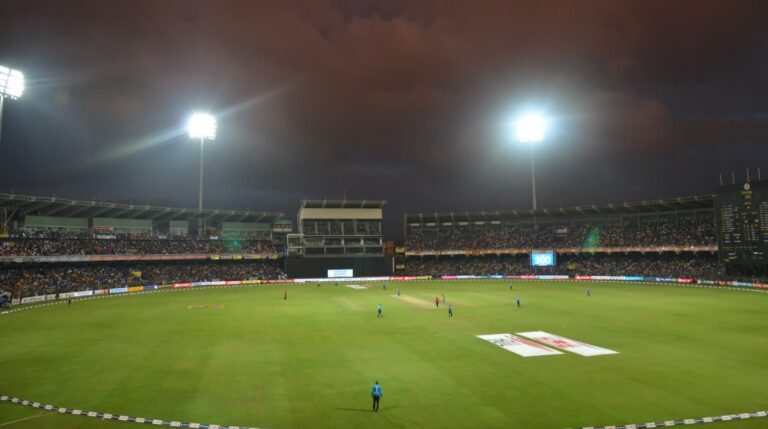
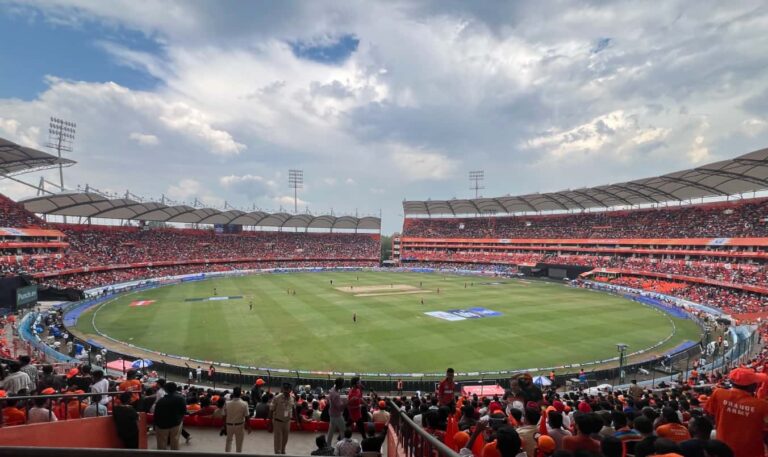
Cricket grounds vary widely in size. Some offer batters easy boundaries while others test their power.
The biggest cricket stadium in the world by boundary isn’t always the one with the most seats.
Boundary length shapes how matches unfold. Long boundaries reward placement over power.
They favor bowlers and make run-scoring harder.
Largest Cricket Stadium in the World By Boundary
Let’s explore which grounds have the longest boundaries and why they matter.
Quick Summary
Key Facts:
- Melbourne Cricket Ground tops the list with 83.43m straight and 86.24m square boundaries
- Sydney Cricket Ground features a rare 93.72m straight boundary
- The playing area is calculated using straight boundaries multiplied by square boundaries
- Boundaries often get shortened for T20 matches to increase scoring
- Test cricket uses full boundary lengths for balanced contests
Understanding Boundary Measurements
Boundary length isn’t uniform across cricket grounds. Each venue has unique dimensions based on its design and purpose.
The playing surface gets measured in two ways. Straight boundaries run from the pitch to the fence at both ends. Square boundaries extend from the pitch to the sides.
Ground rankings combine both measurements. Multiply straight by square boundaries to get the total playing area. This gives you the true size of each venue.
Top 11 Cricket Grounds Ranked By Boundary Size
Here are the world’s largest cricket stadiums measured by their boundary dimensions.
| Rank | Ground Name | Location | Straight Boundary | Square Boundary |
|---|---|---|---|---|
| 1 | Melbourne Cricket Ground | Australia | 83.43m | 86.24m |
| 2 | Sydney Cricket Ground | Australia | 93.72m | 72.83m |
| 3 | Singhalese Sports Club | Colombo, Sri Lanka | 86.10m | 77.02m |
| 4 | Hagley Oval | Christchurch, New Zealand | 83.58m | 77.46m |
| 5 | Basin Reserve | Wellington, New Zealand | 81.70m | 72.48m |
| 6 | Lord’s Cricket Ground | London, UK | 88.87m | 65.21m |
| 7 | Imperial Wanderers Stadium | Johannesburg, South Africa | 86.76m | 64.14m |
| 8 | Kensington Oval | Bridgetown, Barbados | 76.65m | 69.03m |
| 9 | Eden Gardens | Kolkata, India | 76.23m | 66.26m |
| 10 | Narendra Modi Stadium | Ahmedabad, India | 75.00m | 75.00m |
| 11 | Eden Park | Auckland, New Zealand | 64.89m | 68.54m |
#1 Melbourne Cricket Ground, Australia
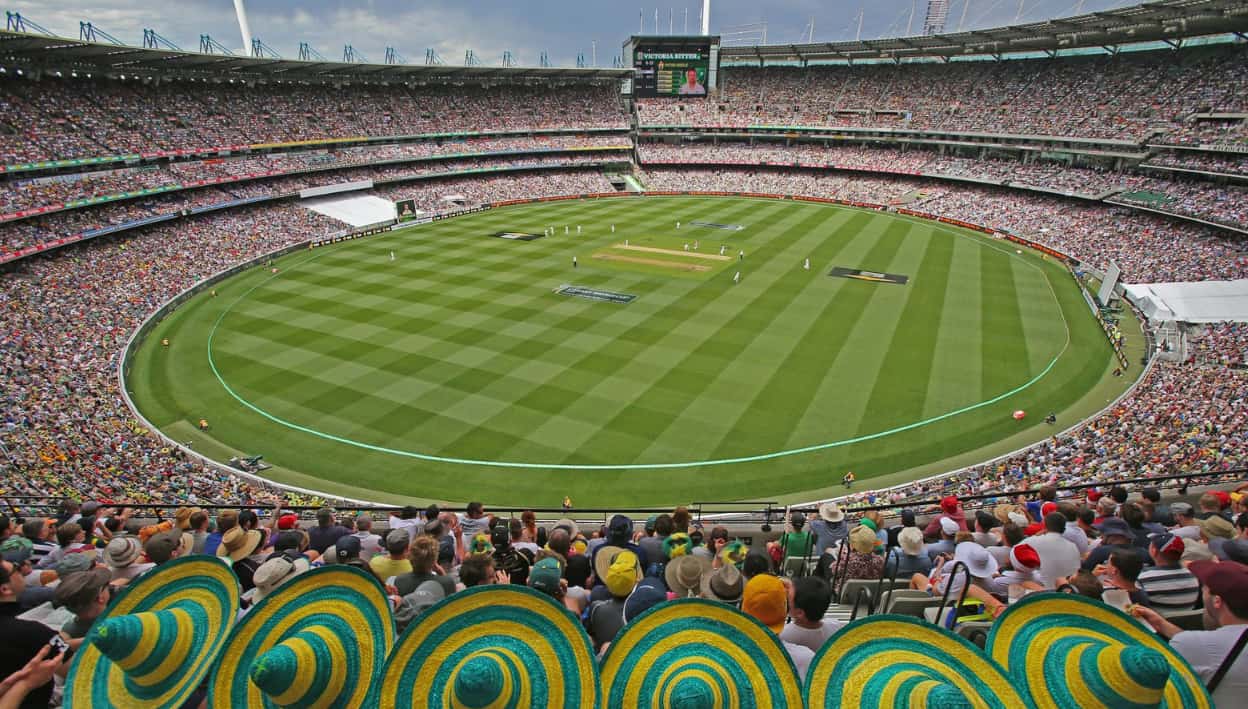
- Straight Boundary: 83.43 metres
- Square Boundary: 86.24 metres
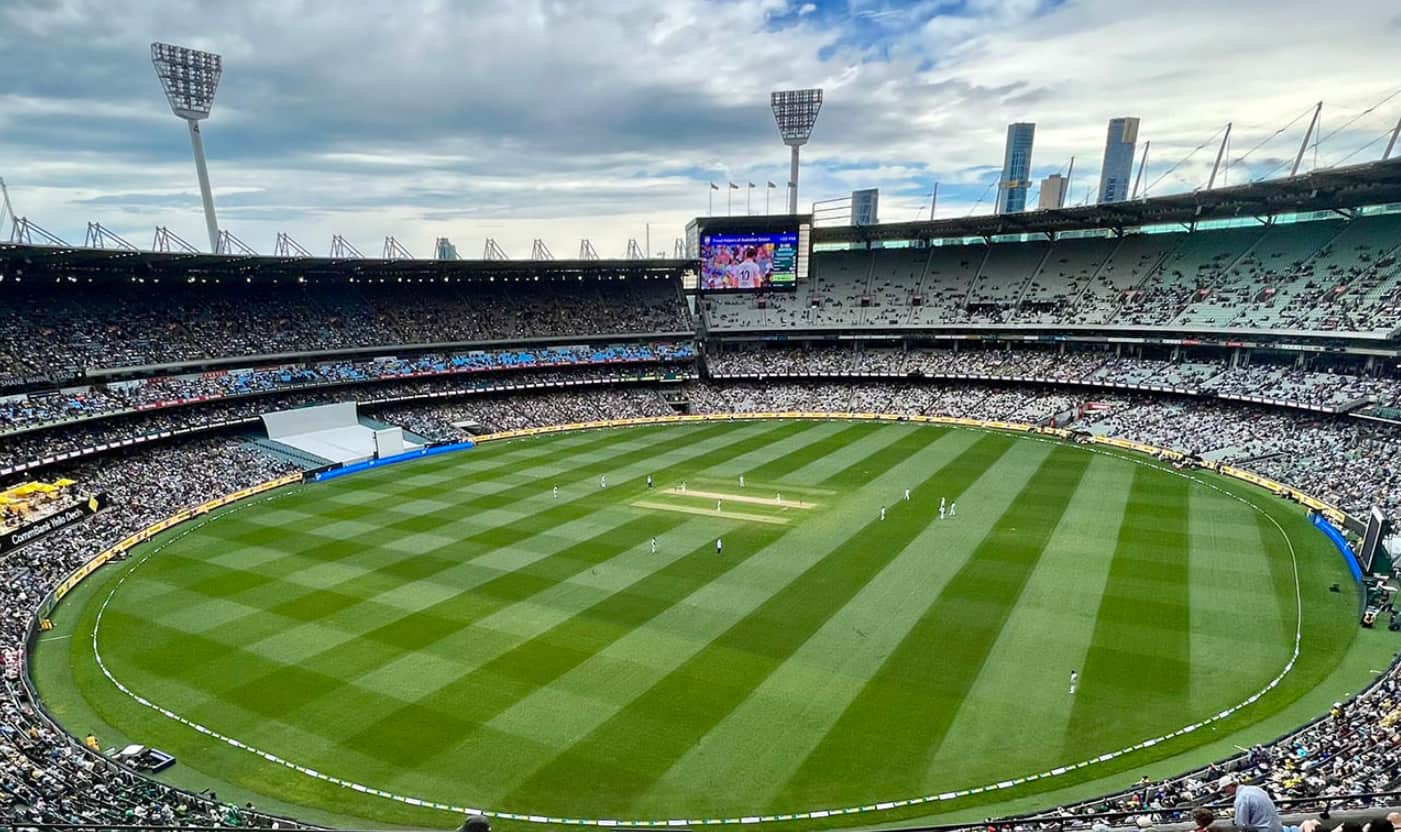
The MCG claims the title as the largest cricket stadium in the world by boundary area. These measurements create the biggest playing surface in world cricket.
This ground hosted cricket’s first Test match back in 1877. Australia faced England in that historic game. The venue has changed dramatically since then.
The MCG staged the Centenary Test in 1977. It now hosts the Boxing Day Test each year. Whichever team tours Australia plays there during the holiday season.
#2 Sydney Cricket Ground, Australia
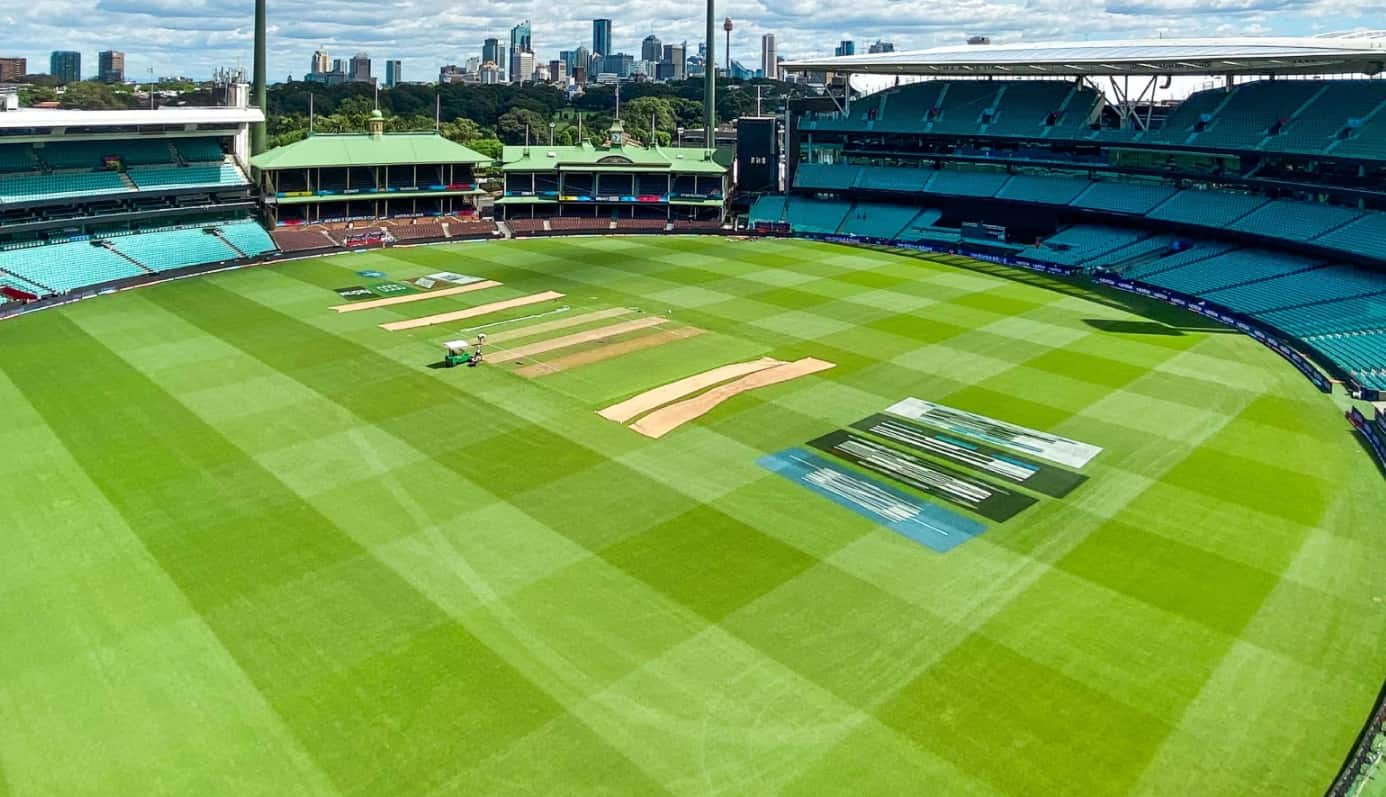
- Straight Boundary: 93.72 metres
- Square Boundary: 72.83 metres
The SCG boasts a 93.72-meter straight boundary. That’s one of the longest in modern cricket. Few grounds can match this distance.
This measurement gets reduced for T20 matches. Organizers bring boundaries in to boost scoring. Otherwise, the playing area remains massive.
The SCG hosts New Year Test matches in Australia. Its large surface supports rugby league too. Multi-sport venues need extra space.
#3 Singhalese Sports Club Cricket Ground, Sri Lanka
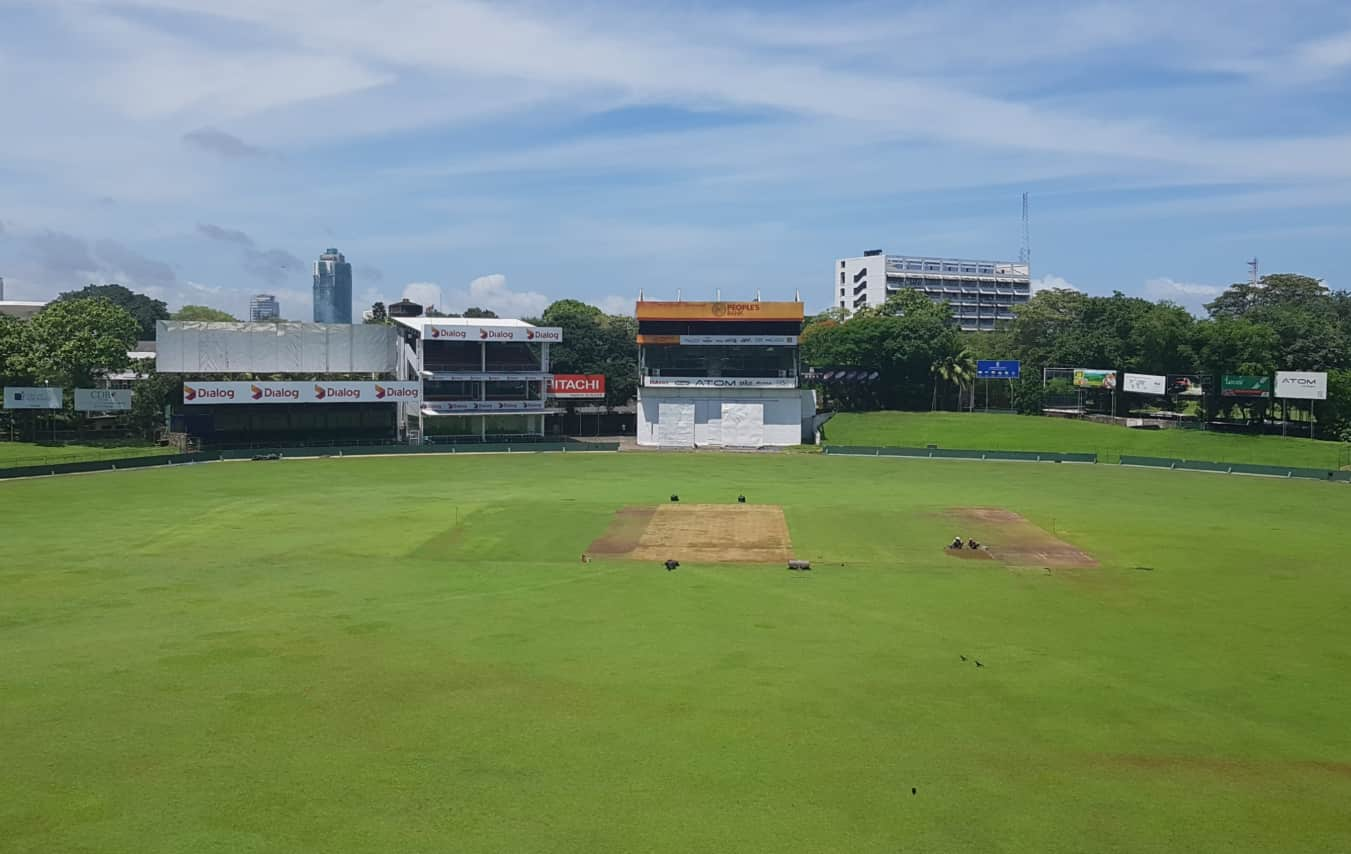
- Straight Boundary: 86.10 metres
- Square Boundary: 77.02 metres
The SSC serves as Sri Lankan cricket headquarters. Established in 1952, it became a Test venue when Sri Lanka joined international cricket in 1982.
New Zealand played Sri Lanka’s first Test here in 1984. The ground measures 86.10 meters straight and 77.02 meters square.
A famous ODI happened here in 2001. Chaminda Vaas took 8 wickets for just 19 runs against Zimbabwe. Zimbabwe scored only 38, the lowest ODI total ever recorded.
#4 Hagley Oval, New Zealand
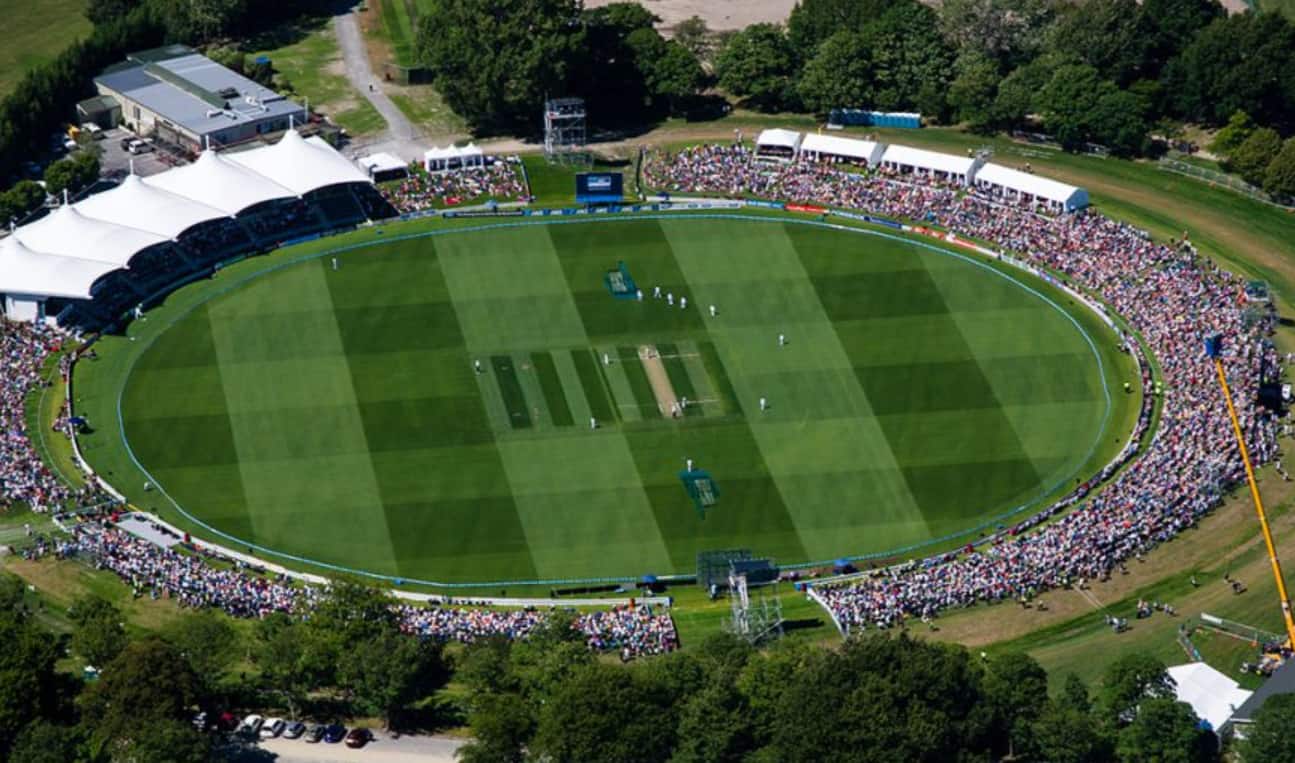
- Straight Boundary: 83.58 metres
- Square Boundary: 77.46 metres
Christchurch cricket moved from Lancaster Park to Hagley Oval. The new venue offers far more space. Cricket began here in 1867, but Test matches didn’t start until 2014.
Lancaster Park couldn’t meet modern cricket needs. Hagley Oval replaced it with boundaries of 83.58 meters straight and 77.46 meters square.
New Zealand’s international matches found a proper home. The extensive surface area suits Test cricket perfectly.
#5 Basin Reserve, New Zealand
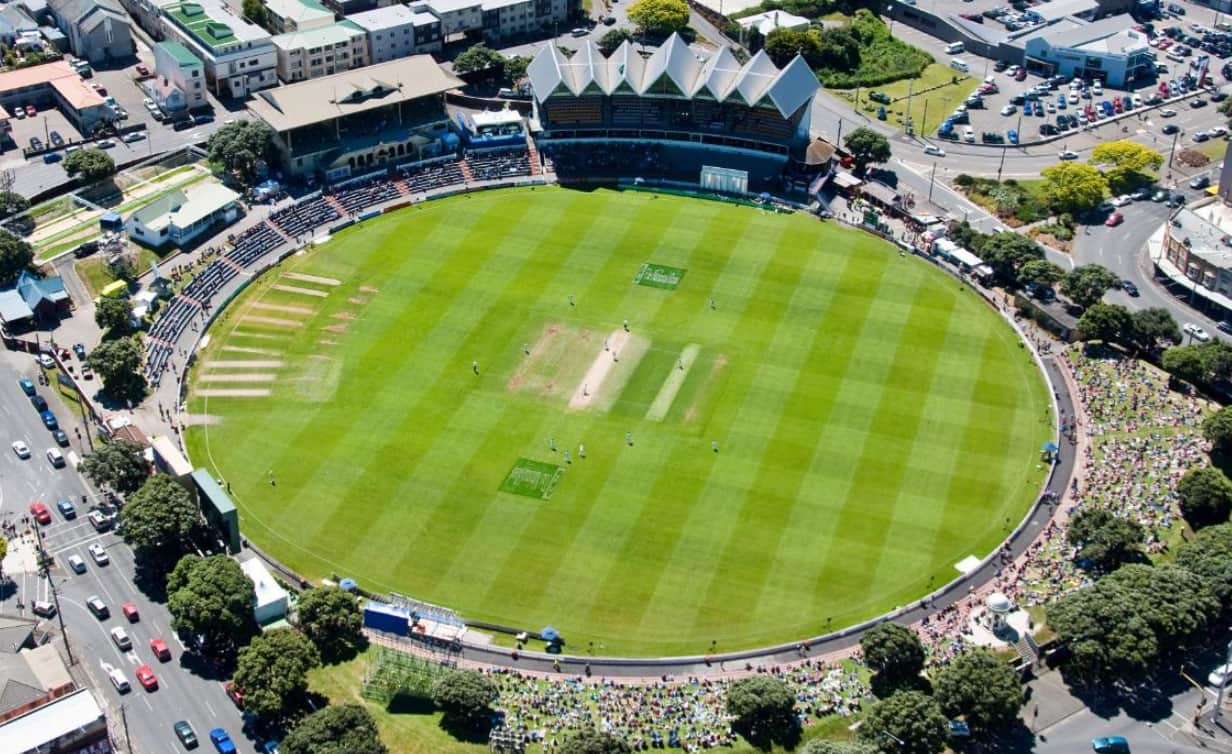
- Straight Boundary: 81.70 metres
- Square Boundary: 72.48 metres
The Basin Reserve sits in central Wellington. The ground occupies a roundabout, creating an unusual setting. Wind often sweeps across the field.
Long boundaries on all sides make batting tough. Add windy conditions, and you get a real challenge. Batters must work hard for runs here.
This is New Zealand’s oldest cricket ground. It holds heritage status. England played the first Test here in 1930.
#6 Lord’s Cricket Ground, United Kingdom
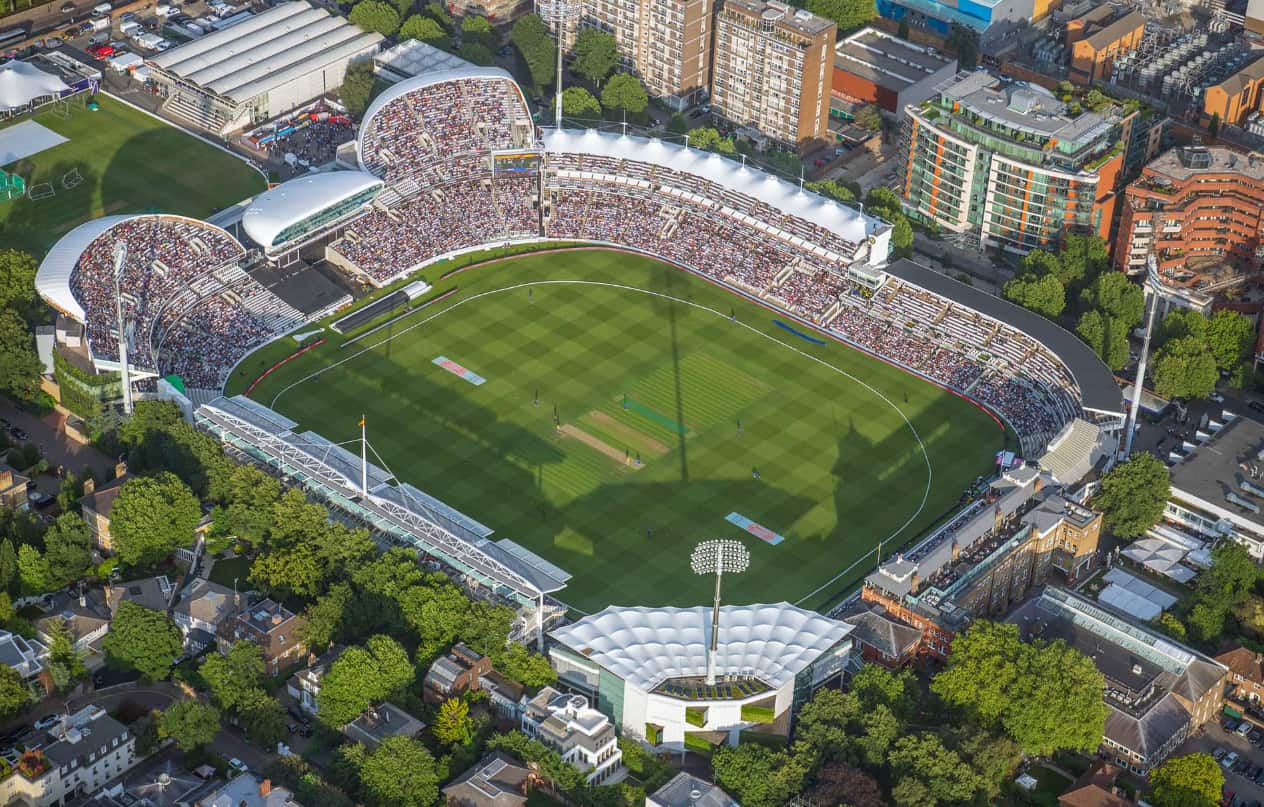
- Straight Boundary: 88.87 metres
- Square Boundary: 65.21 metres
Lord’s is considered cricket’s home. The venue features substantial boundary dimensions that suit its prestigious status.
The ground includes a famous slope. It drops 2.5 meters from north to south. This gradient affects bowling and batting strategy.
England fans view Lord’s as sacred cricket territory. A large playing surface suits this status. Short boundaries would diminish its reputation.
#7 Imperial Wanderers Stadium, South Africa
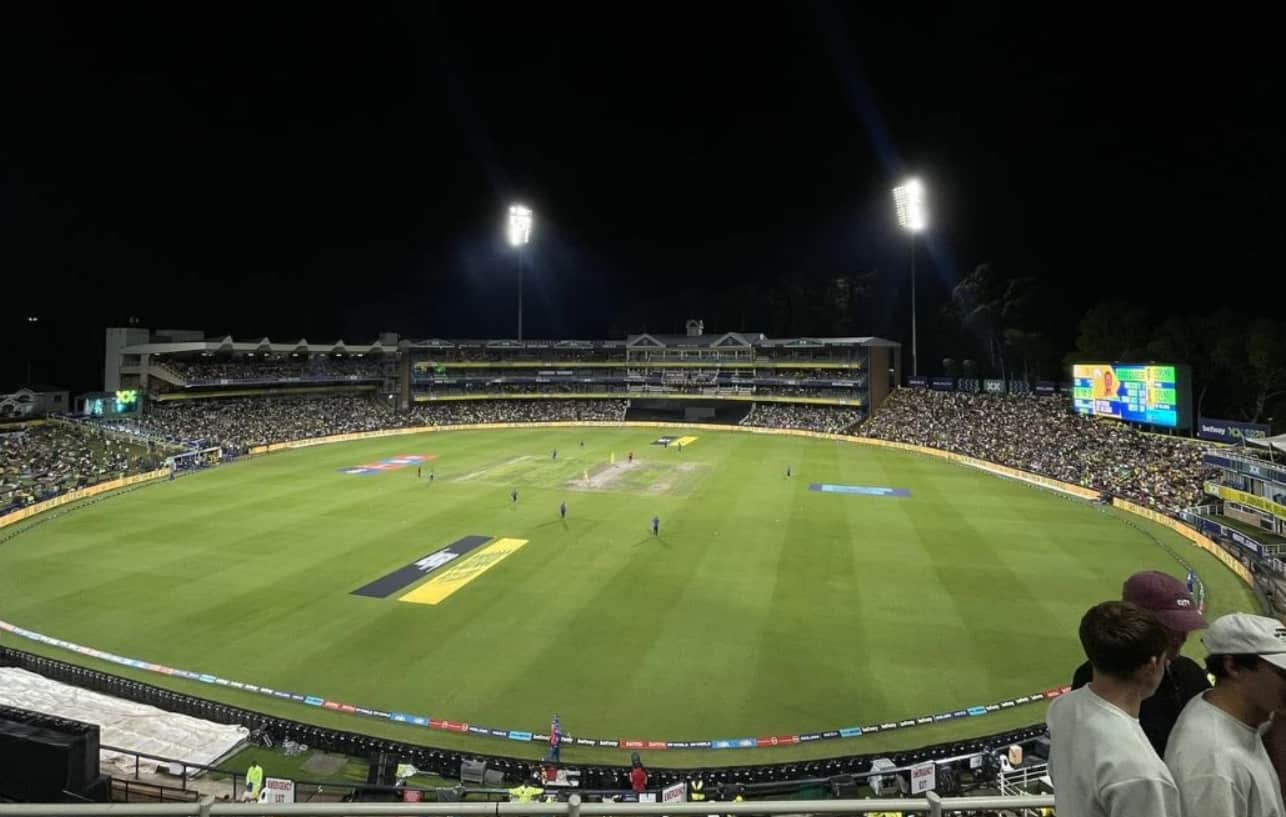
- Straight Boundary: 86.76 metres
- Square Boundary: 64.14 metres
The Wanderers in Johannesburg replaced an older ground in 1956. The first Test match happened that same year.
The 2003 World Cup final took place here. An ODI between South Africa and Australia in 2006 broke records. Australia scored 434 runs, but South Africa won by chasing it down.
#8 Kensington Oval, Barbados
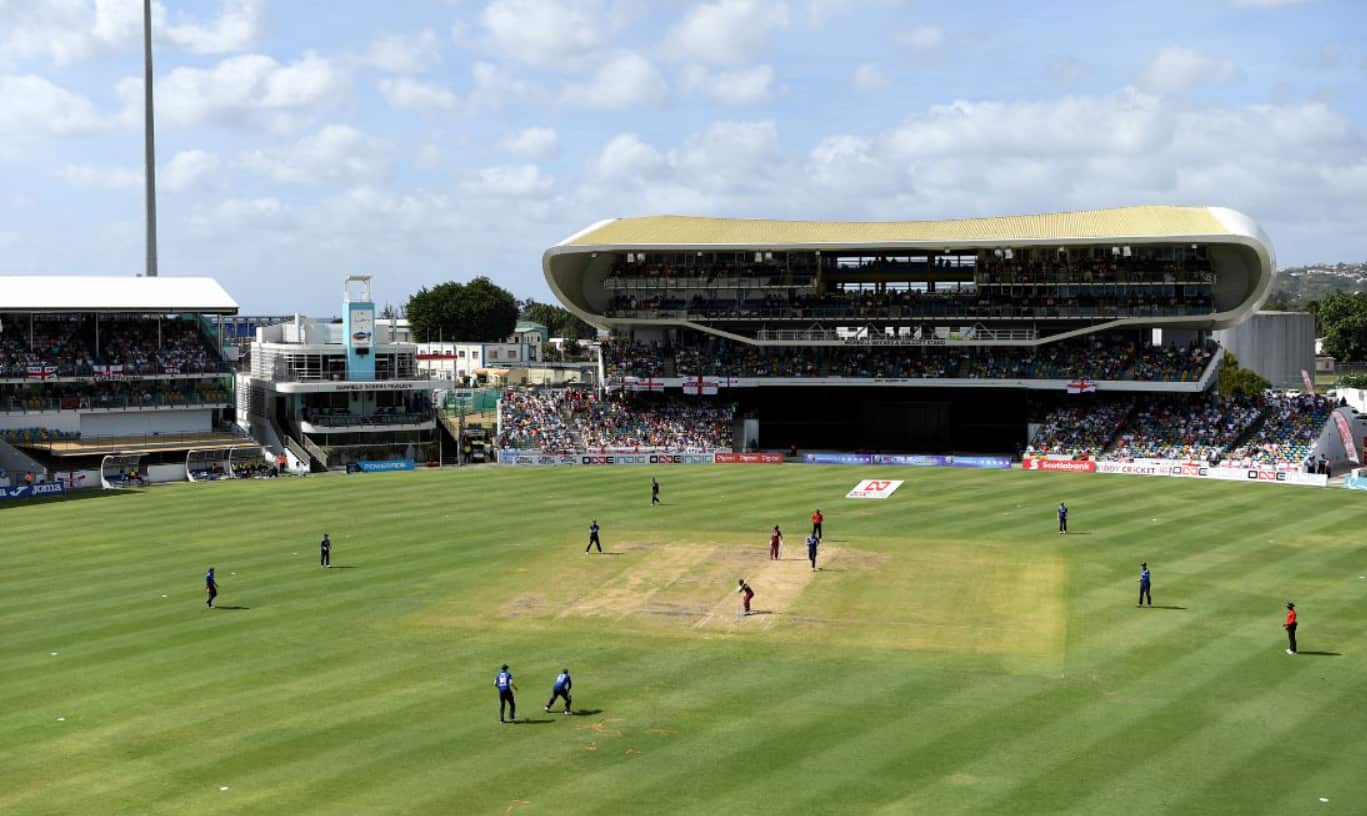
- Straight Boundary: 76.65 metres
- Square Boundary: 69.03 metres
Kensington Oval in Bridgetown has undergone major changes over the decades. The stadium features substantial boundary dimensions.
New stands replaced old structures. The scoreboard got updated, and the pavilion was rebuilt. A major renovation happened before the 2007 World Cup.
The playing surface remained large through all these changes. The first Test match was played here in 1930.
#9 Eden Gardens, India
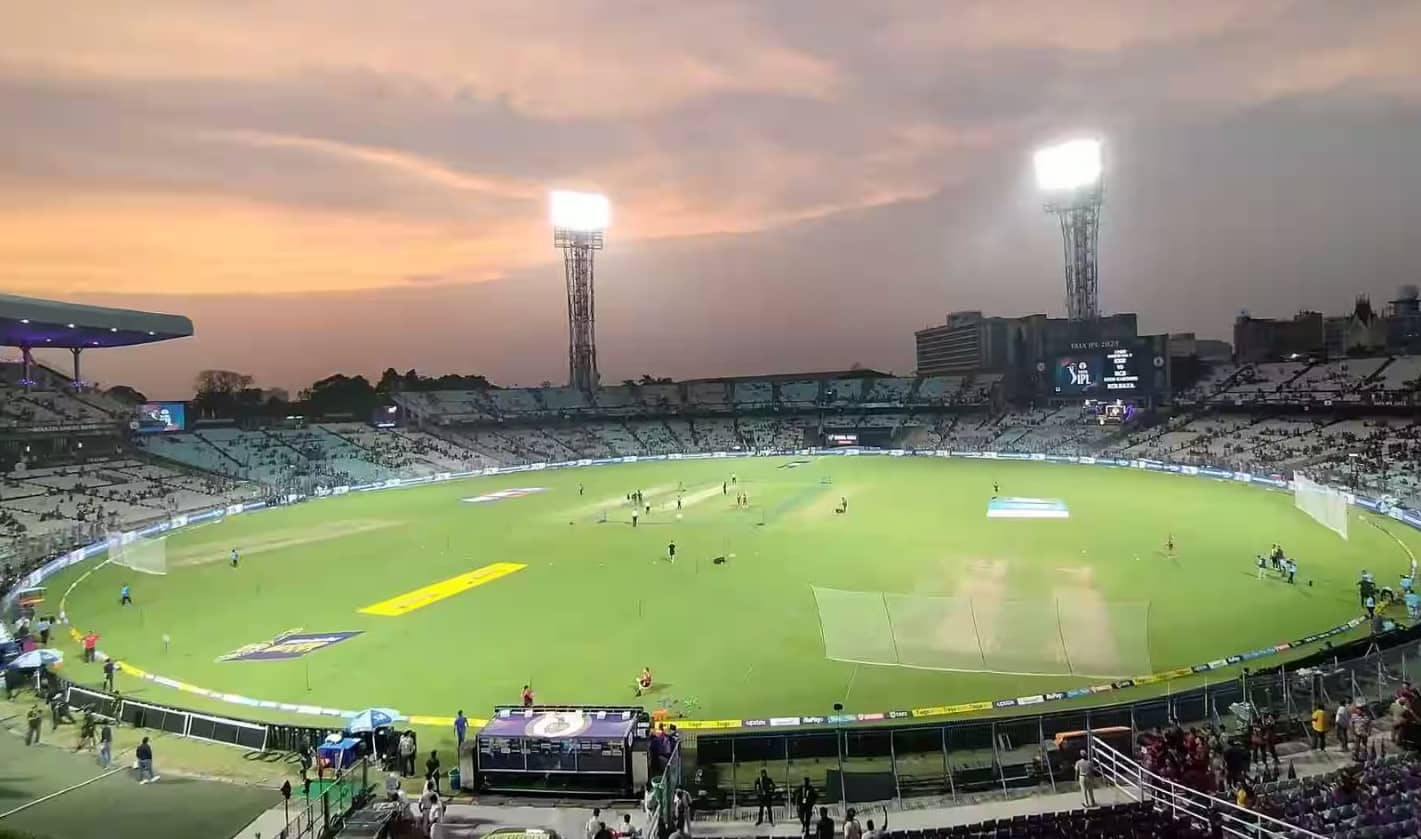
- Straight Boundary: 76.23 metres
- Square Boundary: 66.26 metres
Eden Gardens stands as India’s oldest cricket ground. England played the first Test here in 1934.
Major matches fill Eden Gardens’ history. The 1987 World Cup final happened here.
It was the first final outside England. The venue also hosted the 2016 World T20 final.
#10 Narendra Modi Stadium, India

- Straight Boundary: 75.00 metres
- Square Boundary: 75.00 metres
The Narendra Modi Stadium in Ahmedabad holds the world capacity record. Boundary measurements took time to confirm.
The ground hosted its first upgraded Test in 2021. The IPL final came here a year later. These matches confirmed the venue’s dimensions as 180 by 150 yards.
Maximum boundary lengths sit at 75 yards in all directions. The uniform measurements create balanced playing conditions.
#11 Eden Park, New Zealand
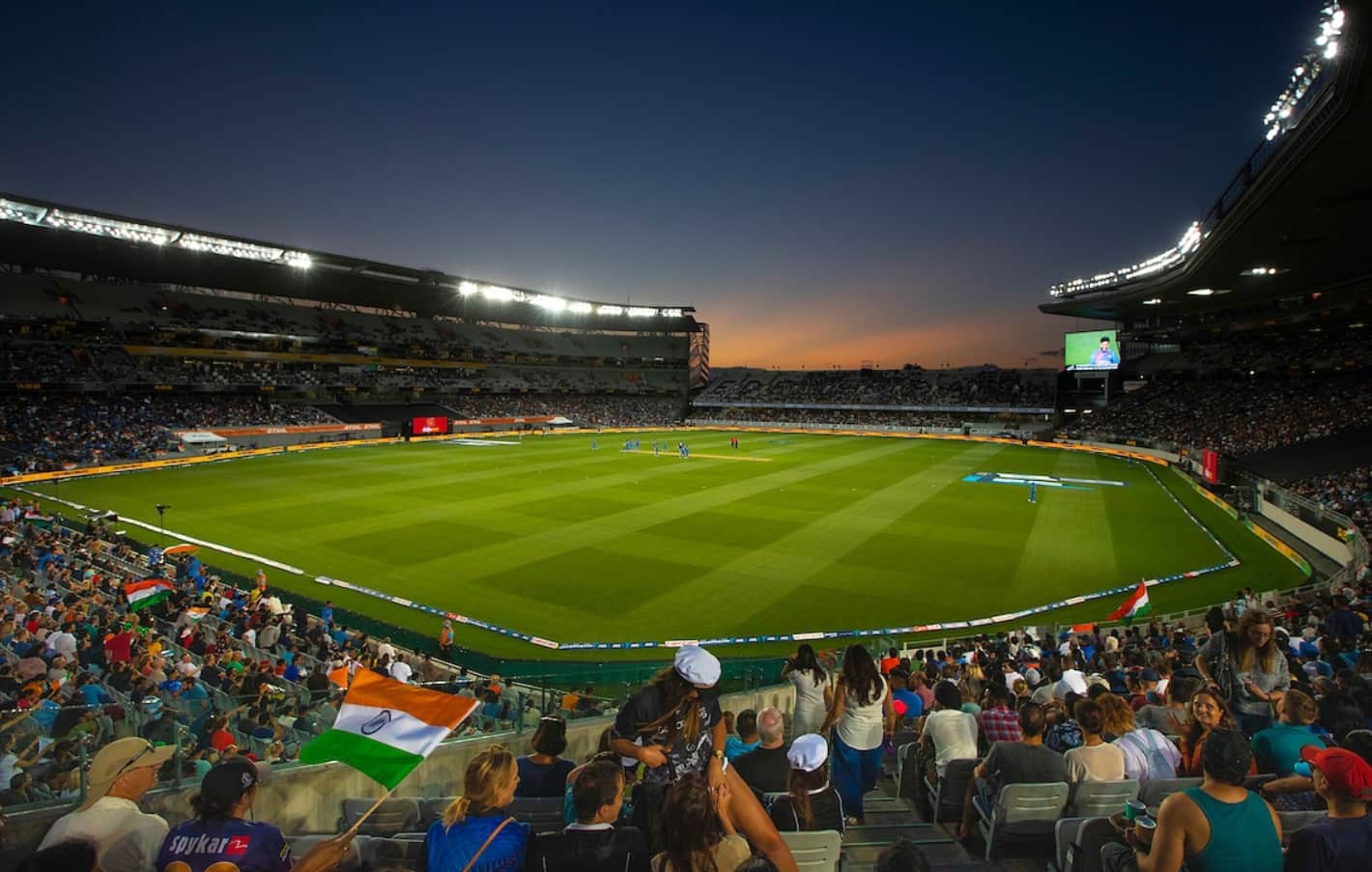
- Straight Boundary: 64.89 metres
- Square Boundary: 68.54 metres
Eden Park rounds out the top eleven biggest cricket grounds by boundary length. New Zealand venues appear frequently on this list.
The first Test match took place here in 1930. Eden Park featured in the 2015 World Cup. Boundaries measure 64.89 meters straight and 68.54 meters square.
How Boundary Length Differs Between Formats?
Cricket formats change how grounds use their full space. Teams adjust boundaries based on match type.
Test cricket needs balanced bat versus ball contests. Boundaries extend to full field length. This creates proper competition between batters and bowlers.
ODI and T20 matches target higher scores. Fans want runs and boundaries. Organizers bring boundaries in from the fence. Shorter boundaries mean more sixes and fours.
Why Are Boundaries Rarely Even?
Cricket squares contain multiple pitches. Big grounds have 14 or more pitch options. This variety serves grounds hosting many matches each season.
Using the same pitch for every game isn’t practical. Different pitches are used throughout the season. This creates uneven boundary lengths on different sides.
Batters target the shorter boundary. Bowling teams must defend it well. Varying boundary length adds tactical depth. Captains get another factor to consider in strategy.
Expert Analysis: Impact on Modern Cricket
Boundary size affects match outcomes significantly. Shorter boundaries favor power hitters in T20 cricket. Longer boundaries suit placement batters who find gaps.
Bowlers benefit from larger grounds. They can attack batters without fearing easy sixes. Fielding teams get more time to cut off boundaries.
Format selection often considers ground size. Big boundaries suit Test cricket’s patient approach. Smaller setups work better for quick-fire T20 entertainment.
Ground conditions matter beyond just boundary length. Wind, pitch behavior, and altitude all combine with boundary size. These factors create unique challenges at each venue.
Comparing Australian and Asian Venues
Australian grounds dominate the top rankings. The MCG and SCG both exceed most Asian venues. Climate and available land explain this difference.
Australia built cricket grounds on large open spaces. Cities had room for massive sporting venues. Asian grounds often face space constraints in crowded cities.
Sri Lanka’s SSC proves Asian venues can compete. Its 86.10-meter straight boundary matches many Australian grounds. Indian stadiums like Eden Gardens also feature substantial dimensions.
Each region developed grounds based on local conditions. Australian size reflects their sporting culture. Asian grounds balance tradition with urban limitations.
Frequently Asked Questions
- Which is the biggest cricket stadium in the world by boundary?
The Melbourne Cricket Ground in Australia holds this title. Its straight boundary measures 83.43 meters, and the square boundary extends 86.24 meters. These combined dimensions create the world’s largest playing area.
- What are the top 10 biggest cricket ground by boundary length in world?
The top ten includes Melbourne Cricket Ground, Sydney Cricket Ground, Singhalese Sports Club, Hagley Oval, Basin Reserve, Lord’s, Imperial Wanderers, Kensington Oval, Eden Gardens, and Narendra Modi Stadium. Each features boundaries exceeding 75 meters in at least one direction.
- Do boundaries change between cricket formats?
Yes, boundaries get adjusted based on format. Test matches use full boundary lengths for balanced competition. T20 and ODI matches bring boundaries closer to increase scoring and entertainment value.
- Why does Sydney Cricket Ground have a 93-meter boundary?
The SCG’s design created this exceptional straight boundary length. The ground’s overall dimensions and multi-sport usage required extensive space. T20 matches reduce this length to keep games competitive.
- How do you calculate cricket ground playing area?
Multiply the straight boundary length by square boundary length. This calculation determines the total playing surface area. Rankings use this method to compare grounds worldwide.
Conclusion:
The largest cricket stadiums in the world by boundary create unique playing conditions.
Melbourne Cricket Ground tops the rankings with its 83.43-meter straight and 86.24-meter square boundaries.
Sydney Cricket Ground’s 93.72-meter straight boundary remains unmatched.
These grounds test batters differently from smaller venues. Power hitting alone won’t succeed on large boundaries.
Placement, running between wickets, and stamina matter more.
Different formats use boundary space strategically. Test cricket embraces full dimensions for balanced contests.
Limited-overs cricket brings boundaries in for faster scoring. Each approach serves its format’s goals perfectly.
Also Check:
- Smallest Cricket Stadium In India By Boundary
- Most Beautiful Cricket Stadium In The World
- How Many International Cricket Stadiums in India
About the Author