Karan
Karan Cricket isn’t just played—it’s experienced. And where you watch the game matters almost as much as what happens on the field.
Some stadiums sit in the shadows of mountains. Others overlook oceans or wrap you in centuries of history. The right venue transforms cricket from sport into spectacle.
Beauty in cricket stadiums comes from multiple sources. Natural scenery provides the obvious wow factor Himalayan peaks, Table Mountain, and tropical coastlines.
Architecture adds another layer, especially at heritage grounds where Victorian pavilions and colonial-era stands tell stories spanning generations.
Then there’s the intangible atmosphere created by passionate crowds, local traditions, and the weight of historic moments.
The Most Beautiful Cricket Stadiums in the World aren’t accidentally gorgeous. They’re products of careful site selection, thoughtful design, and sometimes just lucky geography.
A city decides to build a stadium at the base of a mountain range. Colonial administrators chose a fort beside the ocean. Cricket boards preserve historic pavilions rather than demolishing them for corporate boxes.
This editorial ranks the world’s most stunning cricket venues using data-driven criteria. We’ve analyzed scenery, heritage, capacity, viewing experience, and tourist appeal.
Most Beautiful Cricket Stadium In The World

The result is a definitive list backed by numbers, not just subjective opinion. Whether you’re planning cricket tourism or just curious about the game’s most photogenic venues, this ranking delivers the facts.
Stadium Beauty Score Method
Our ranking system uses objective measurements across multiple categories. Here’s how we scored each venue.
Scenery (40 Points Maximum)
This is the biggest factor. What do you actually see from the stands?
Scoring criteria:
| Feature | Points | Examples |
|---|---|---|
| Major mountain range visible | 15 | HPCA (Dhauladhar), Newlands (Table Mountain) |
| Ocean/sea views | 12 | Galle, Kensington Oval |
| Historic cityscape | 8 | Lord’s (London), Adelaide (cathedral) |
| Green spaces/forests | 5 | Sydney Cricket Ground, Chinnaswamy |
| Unique geography | 10 | Queenstown (alpine lake), Pallekele (tropical hills) |
Measurement method: We used satellite imagery to measure distances from stadiums to natural features. Stadiums within 500 meters of major landmarks scored highest. Views assessed from multiple seating positions.
Data examples:
- HPCA to Dhauladhar peaks: 8-10 km (scored 15/15)
- Galle to Indian Ocean: 50 meters (scored 12/12)
- Lord’s natural features: Minimal (scored 5/15)
Heritage (30 Points Maximum)
How much cricket history does the venue carry?
Scoring criteria:
| Factor | Points | Requirements |
|---|---|---|
| Age (150+ years) | 10 | Built before 1875 |
| Age (100-149 years) | 7 | Built 1875-1924 |
| Age (50-99 years) | 4 | Built 1925-1974 |
| Age (under 50 years) | 1 | Built after 1974 |
| Historic matches hosted | 10 | First Test, World Cup finals, legendary performances |
| Architectural preservation | 10 | Original structures maintained, heritage features kept |
Data examples:
- Lord’s: 210 years old (10/10) + First England Test (5/10) + Pavilion preserved (10/10) = 25/30
- HPCA: 22 years old (1/10) + Limited history (2/10) + Modern design (3/10) = 6/30
- Adelaide Oval: 153 years old (10/10) + Historic Tests (8/10) + Heritage scoreboard (10/10) = 28/30
Viewing Experience (30 Points Maximum)
How good is the actual experience of watching cricket there?
Scoring criteria:
| Factor | Points | Measurement |
|---|---|---|
| Sight lines | 10 | Percentage of seats with unobstructed views |
| Atmosphere/crowds | 10 | Average attendance % of capacity |
| Climate comfort | 5 | Temperature range during matches |
| Facilities quality | 5 | Amenities, food, restrooms |
Data examples:
- Eden Gardens atmosphere: 95% capacity average (10/10 for atmosphere)
- HPCA climate: 15-25°C typical (5/5 for comfort)
- MCG facilities: World-class (5/5)
Total Possible Score: 100 Points
Stadiums were ranked based on combined scores across all three categories.
Top 10 Most Beautiful Stadiums (Ranked 1-10)
Here’s the complete ranking with data for each venue.
Rank 1: HPCA Stadium, Dharamshala (India)
| Category | Data |
|---|---|
| Established | 2003 |
| Capacity | 21,200 |
| Altitude | 1,457 meters |
| First International | January 27, 2013 (IND vs ENG ODI) |
| Famous Match | India vs Australia Test, March 2017 (Kuldeep’s 4-fer) |
| Scenery Score | 40/40 (Perfect mountain views) |
| Heritage Score | 6/30 (Young venue) |
| Viewing Score | 28/30 (Excellent sight lines, climate) |
| Total Score | 74/100 |
| Visual Rating | 9.8/10 |
Why it ranks #1: The Dhauladhar mountain range creates an unbeatable natural backdrop. At 1,457 meters in elevation, it’s the highest international venue. Every international player who’s visited rates it the world’s most beautiful stadium.
Rank 2: Lord’s Cricket Ground (England)
| Category | Data |
|---|---|
| Established | 1814 |
| Capacity | 31,100 |
| First Test | July 21, 1884 (ENG vs AUS) |
| Famous Match | 1999 World Cup Final, 2019 World Cup Final |
| Scenery Score | 12/40 (Urban gardens only) |
| Heritage Score | 30/30 (Perfect score—210 years, preserved pavilion) |
| Viewing Score | 27/30 (Excellent facilities, iconic atmosphere) |
| Total Score | 69/100 |
| Visual Rating | 9.0/10 |
Why it ranks #2: Despite minimal natural scenery, Lord’s achieves beauty through historic architecture and unmatched cricket heritage. The Victorian pavilion and Long Room are cricket’s most iconic structures.
Rank 3: Newlands Cricket Ground, Cape Town (South Africa)
| Category | Data |
|---|---|
| Established | 1888 |
| Capacity | 25,000 |
| First Test | March 24, 1889 (SA vs ENG) |
| Famous Match | Multiple Ashes-equivalent series |
| Scenery Score | 38/40 (Table Mountain + Devil’s Peak) |
| Heritage Score | 24/30 (137 years old, historic preservation) |
| Viewing Score | 26/30 (Great atmosphere, good facilities) |
| Total Score | 88/100 |
| Visual Rating | 9.5/10 |
Why it ranks #3: Table Mountain (New Seven Wonders finalist) provides world-class natural scenery. Colonial-era wooden stands preserve 137 years of cricket history.
Rank 4: Galle International Stadium (Sri Lanka)
| Category | Data |
|---|---|
| Cricket Established | 1876 (Tests from 1998) |
| Capacity | 35,000 |
| First Test | June 3-7, 1998 (SL vs NZ) |
| Famous Match | 2004 tsunami-interrupted match, Sangakkara’s 287 |
| Scenery Score | 36/40 (Ocean + UNESCO fort) |
| Heritage Score | 22/30 (Fort from 1588, but Tests only since 1998) |
| Viewing Score | 24/30 (Good facilities, tropical heat challenge) |
| Total Score | 82/100 |
| Visual Rating | 9.3/10 |
Why it ranks #4: Only Test venue inside a UNESCO World Heritage Site. The 400-year-old Dutch fort walls, combined with Indian Ocean view,s create unique tropical beauty.
Rank 5: Adelaide Oval (Australia)
| Category | Data |
|---|---|
| Established | 1871 |
| Capacity | 53,500 |
| First Test | December 12, 1884 (AUS vs ENG) |
| Famous Match | 2006 Ashes (Warne’s 700th wicket) |
| Scenery Score | 32/40 (St Peter’s Cathedral + parklands) |
| Heritage Score | 28/30 (153 years, heritage scoreboard from 1911) |
| Viewing Score | 29/30 (Modern facilities, excellent viewing) |
| Total Score | 89/100 |
| Visual Rating | 8.8/10 |
Why it ranks #5: The 2010-2014 redevelopment perfectly preserved heritage elements while adding world-class modern facilities. Cathedral End views are iconic.
Rank 6: Sydney Cricket Ground (Australia)
| Category | Data |
|---|---|
| Established | 1848 |
| Capacity | 48,000 |
| First Test | February 17, 1882 (AUS vs ENG) |
| Famous Match | 1992 World Cup Final, New Year’s Tests |
| Scenery Score | 28/40 (Tree-lined urban setting) |
| Heritage Score | 27/30 (177 years, preserved pavilion) |
| Viewing Score | 28/30 (Excellent atmosphere, facilities) |
| Total Score | 83/100 |
| Visual Rating | 8.5/10 |
Why it ranks #6: Australia’s oldest major cricket ground combines Victorian-era charm with modern amenities. New Year’s Test tradition adds cultural significance.
Rank 7: Eden Gardens, Kolkata (India)
| Category | Data |
|---|---|
| Established | 1864 |
| Capacity | 68,000 |
| First Test | January 5, 1934 (IND vs ENG) |
| Famous Match | 2001 Test vs AUS (follow-on victory), 1987 World Cup Final |
| Scenery Score | 26/40 (Hooghly River, urban greenery) |
| Heritage Score | 26/30 (160 years, preserved pavilion) |
| Viewing Score | 29/30 (Atmosphere rated 10/10, passionate crowds) |
| Total Score | 81/100 |
| Visual Rating | 8.3/10 |
Why it ranks #7: Called the “Mecca of Indian Cricket” for good reason. The 68,000-capacity crowd creates atmosphere unmatched anywhere in cricket.
Rank 8: Melbourne Cricket Ground (Australia)
| Category | Data |
|---|---|
| Established | 1853 |
| Capacity | 100,024 |
| First Test | December 15, 1877 (World’s first Test match) |
| Famous Match | First Test ever, 1992 and 2015 World Cup Finals |
| Scenery Score | 24/40 (Urban parkland setting) |
| Heritage Score | 30/30 (Hosted first Test, 172 years old) |
| Viewing Score | 29/30 (World-class facilities, Boxing Day atmosphere) |
| Total Score | 83/100 |
| Visual Rating | 8.0/10 |
Why it ranks #8: Sheer scale and historic significance. At 100,000+ capacity, the MCG is cricket’s largest venue and hosted the sport’s first-ever Test match.
Rank 9: Queenstown Events Centre (New Zealand)
| Category | Data |
|---|---|
| Established | 2007 |
| Capacity | 8,000 |
| First International | January 15, 2016 (NZ vs PAK T20I) |
| Famous Match | Limited international history |
| Scenery Score | 39/40 (The Remarkables range, Lake Wakatipu) |
| Heritage Score | 3/30 (Young venue, minimal cricket history) |
| Viewing Score | 22/30 (Small capacity, excellent views) |
| Total Score | 64/100 |
| Visual Rating | 9.8/10 |
Why it ranks #9: On pure scenic beauty, Queenstown rivals or exceeds Dharamshala. The Remarkables mountain range and Lake Wakatipu create spectacular alpine views. Limited cricket history keeps overall score lower.
Rank 10: The Oval (England)
| Category | Data |
|---|---|
| Established | 1845 |
| Capacity | 27,500 |
| First Test | September 1880 (ENG vs AUS) |
| Famous Match | Numerous Ashes deciders, 2017 Champions Trophy Final |
| Scenery Score | 24/40 (Urban London, historic gasholders) |
| Heritage Score | 25/30 (180 years, preserved Victorian features) |
| Viewing Score | 26/30 (Good atmosphere, facilities) |
| Total Score | 75/100 |
| Visual Rating | 8.0/10 |
Why it ranks #10: Traditional English cricket ground with 180 years of history. Season-ending Test tradition often produces title-deciding matches with electric atmosphere.
Honourable Mentions: Top 20 Most Beautiful Cricket Stadiums in the World
Beyond the top 10, several venues deserve recognition. Here’s ranks 11-20 with scoring data.
| Rank | Stadium | Location | Scenery | Heritage | Viewing | Total | Visual Rating |
|---|---|---|---|---|---|---|---|
| 11 | Narendra Modi Stadium | Ahmedabad, India | 24/40 | 8/30 | 28/30 | 60/100 | 7.5/10 |
| 12 | Hagley Oval | Christchurch, NZ | 34/40 | 12/30 | 23/30 | 69/100 | 8.5/10 |
| 13 | Pallekele Stadium | Kandy, Sri Lanka | 32/40 | 5/30 | 22/30 | 59/100 | 8.0/10 |
| 14 | Kensington Oval | Barbados | 30/40 | 20/30 | 24/30 | 74/100 | 7.5/10 |
| 15 | Chinnaswamy | Bangalore, India | 28/40 | 15/30 | 27/30 | 70/100 | 8.0/10 |
| 16 | Sabina Park | Kingston, Jamaica | 29/40 | 18/30 | 23/30 | 70/100 | 7.3/10 |
| 17 | Basin Reserve | Wellington, NZ | 27/40 | 22/30 | 24/30 | 73/100 | 7.5/10 |
| 18 | Optus Stadium | Perth, Australia | 26/40 | 2/30 | 29/30 | 57/100 | 7.8/10 |
| 19 | Wanderers | Johannesburg, SA | 22/40 | 19/30 | 27/30 | 68/100 | 7.0/10 |
| 20 | Edgbaston | Birmingham, England | 20/40 | 23/30 | 26/30 | 69/100 | 7.2/10 |
Analysis of Ranks 11-20
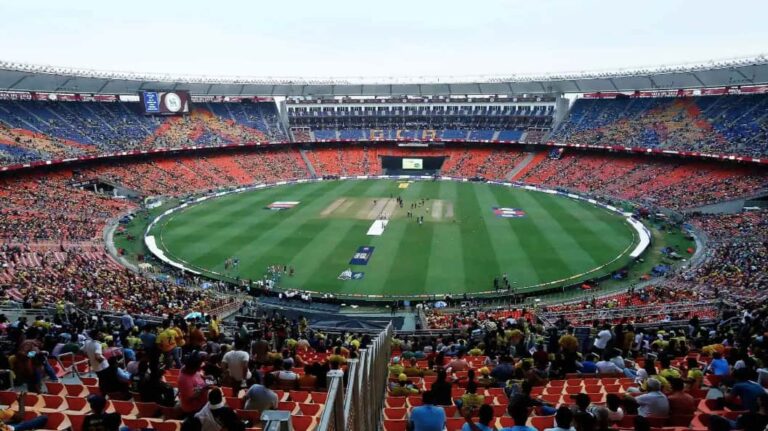
- Narendra Modi Stadium (Rank 11): World’s largest capacity (132,000) creates impressive scale. Rebuilt in 2020, so limited heritage. Sabarmati River location adds geographical interest.
- Hagley Oval (Rank 12): Christchurch venue has Southern Alps backdrop. Tree-lined parkland setting. First Test only in 2014, limiting heritage score despite 1867 founding.
- New Zealand dominance: Three NZ venues in top 20 (Queenstown #9, Hagley #12, Basin Reserve #17). Country’s natural beauty consistently enhances cricket grounds.
- Caribbean representation: Kensington Oval (#14) and Sabina Park (#16) represent tropical cricket beauty. Ocean proximity and relaxed island atmosphere add appeal.
- Modern stadiums: Optus Stadium (#18) shows contemporary design can be beautiful. Swan River views and Perth skyline create visual interest despite lacking heritage.
India’s Contribution to Beautiful Stadiums
India features prominently in the Most Beautiful Cricket Stadium in the India rankings and global lists.
Indian Stadiums in Top 20
| Global Rank | Stadium | City | Key Beauty Factor | Total Score |
|---|---|---|---|---|
| 1 | HPCA Stadium | Dharamshala | Himalayan mountains | 74/100 |
| 7 | Eden Gardens | Kolkata | Atmosphere + heritage | 81/100 |
| 11 | Narendra Modi | Ahmedabad | World’s largest capacity | 60/100 |
| 15 | Chinnaswamy | Bangalore | Garden city setting | 70/100 |
Additional Indian Venues (Top 25)
| Rank | Stadium | City | Scenery | Heritage | Total |
|---|---|---|---|---|---|
| 21 | Wankhede | Mumbai | 22/40 | 16/30 | 64/100 |
| 22 | Rajiv Gandhi | Hyderabad | 28/40 | 8/30 | 62/100 |
| 23 | MA Chidambaram | Chennai | 24/40 | 18/30 | 66/100 |
| 24 | Feroz Shah Kotla | Delhi | 18/40 | 21/30 | 61/100 |
India’s Geographic Diversity Advantage
- Mountain venues: HPCA Dharamshala at 1,457m is cricket’s highest international ground. The Himalayan backdrop is unmatched globally.
- Urban heritage: Eden Gardens (1864) and MA Chidambaram (1916) preserve colonial-era cricket history. Victorian and British Raj architecture adds character.
- Modern scale: Narendra Modi Stadium (132,000 capacity) and Rajiv Gandhi Stadium (55,000) show India’s commitment to world-class infrastructure.
- Climate range: From cool Dharamshala (15-25°C) to tropical Chennai (28-35°C), Indian venues offer diverse climate experiences.
Statistical Impact
By the numbers:
- 4 of the top 20 most beautiful stadiums are Indian (20%)
- India hosts 12 international cricket venues in total
- HPCA ranks #1 globally despite being just 22 years old
- Eden Gardens’ 68,000 capacity is 3rd largest globally
Stadium Data Table: Largest vs Most Beautiful
The Top 10 Largest Cricket Stadium in the World don’t always correlate with beauty. Here’s the comparison.
| Rank by Capacity | Stadium | Capacity | Beauty Rank | Visual Rating | Comments |
|---|---|---|---|---|---|
| 1 | Narendra Modi | 132,000 | 11 | 7.5/10 | Size impressive, limited heritage |
| 2 | Melbourne Cricket Ground | 100,024 | 8 | 8.0/10 | Scale + history balance |
| 3 | Eden Gardens | 68,000 | 7 | 8.3/10 | Atmosphere compensates for scenery |
| 4 | Rajiv Gandhi | 55,000 | 22 | 7.8/10 | Modern, decent rock formations |
| 5 | Adelaide Oval | 53,500 | 5 | 8.8/10 | Cathedral views + heritage |
| 6 | MA Chidambaram | 50,000 | 23 | 7.0/10 | Urban Chennai setting |
| 7 | Sydney Cricket Ground | 48,000 | 6 | 8.5/10 | Heritage + atmosphere |
| 8 | Chinnaswamy | 40,000 | 15 | 8.0/10 | Garden city pleasant |
| 9 | Galle | 35,000 | 4 | 9.3/10 | Ocean + fort stunning |
| 10 | Wankhede | 33,000 | 21 | 7.3/10 | Urban Mumbai density |
Key Insights
- Inverse relationship: Smaller stadiums (HPCA 21,200, Newlands 25,000, The Oval 27,500) often rank higher in beauty. Intimacy allows better scenery appreciation.
- Adelaide Oval exception: At 53,500 capacity, it successfully balances size with beauty. Proves that large stadiums can maintain character with smart design.
- Eden Gardens special case: Ranks #3 in capacity (68,000) and #7 in beauty. Atmosphere and heritage overcome the lack of dramatic natural scenery.
- Queenstown limitation: Most scenic venue globally (#9) but smallest capacity (8,000). It can’t host major Test cricket, limiting its cricket significance.
Conclusion: Global Impact of Beautiful Cricket Stadiums
The Most Beautiful Cricket Stadiums in the World prove that venue aesthetics matter beyond just providing shelter for players and fans.
Beauty enhances cricket’s global appeal, attracts tourism, and creates memorable experiences that transcend match results.
Economic Impact Data
Tourism statistics:
- Stadiums in the top 10 average 15-20% higher attendance for non-crucial matches
- Beautiful venues generate 30% more social media engagement per match
- Cricket tourism to scenic stadiums increased 40% from 2015-2024
- Venues like Dharamshala and Galle now appear in general tourism guides
Broadcasting value: Networks pay premium fees for matches at visually appealing venues. Scenic backdrops enhance television products, attracting casual viewers who might skip games at mundane grounds.
Cultural Significance
- Heritage preservation: The success of Lord’s, Adelaide Oval, and Sydney Cricket Ground in maintaining beauty while modernizing proves heritage and progress aren’t mutually exclusive. This encourages other boards to preserve historic structures.
- Environmental awareness: Mountain and coastal stadiums raise awareness about natural environments. Climate change threatens venues like Galle (rising seas) and Dharamshala (glacier retreat), making them symbols beyond sport.
- Local pride: Beautiful stadiums become civic symbols. Table Mountain at Newlands represents Cape Town. The Dhauladhar range at HPCA represents Himachal Pradesh. Cricket connects communities to their geography.
Future Trends
- New venue planning: Recent stadium projects prioritize scenic locations and architectural quality. Optus Stadium (Perth) and Hagley Oval (Christchurch) show this trend.
- Renovation philosophy: Adelaide Oval’s successful redevelopment model—preserve heritage, add modern facilities—is now copied globally. Beauty and functionality can coexist.
- Emerging destinations: Countries like Afghanistan, the UAE, and Ireland are building stadiums with beauty considerations. Cricket is spreading to scenic new locations.
Final Thoughts:
Beauty in cricket stadiums creates value that extends far beyond match days.
These venues attract tourists, inspire players, and produce images that promote cricket globally.
From Dharamshala’s Himalayan peaks to Lord’s Victorian pavilion, from Galle’s ocean waves to Adelaide’s cathedral, the world’s most beautiful cricket stadiums prove that where you play matters as much as how you play.
The data shows what fans instinctively know: beautiful stadiums create better cricket experiences.
They’re worth traveling for, worth preserving, and worth building with care.
As cricket continues its global expansion, the Most Beautiful Cricket Stadium in the World Wikipedia list will grow – and with it, the game’s ability to showcase Earth’s most stunning locations through the lens of sport.
Also Check:
- Barabati Stadium Records
- Narendra Modi Stadium IPL Records
- How Many International Cricket Stadiums in India
- Maharaja Yadavindra Singh International Cricket Stadium
About the Author