Venue-specific preparation determines team composition and tactical approach in T20 cricket.
Surface behavior, boundary dimensions, and crowd pressure influence selection decisions across batting order, bowling combinations, and fielding placements.
Players and analysts require accurate venue intelligence before squad finalization.
Fantasy cricket users need statistical patterns to identify high-value picks based on pitch characteristics and scoring trends.
Understanding the Central Broward Regional Park stadium turf ground pitch report, boundary length, and capacity helps teams optimize resources before match day.
Venue familiarity separates prepared squads from reactive ones during high-stakes international fixtures.
Central Broward Regional Park Stadium Turf Ground Pitch Report, Boundary Length, and Capacity
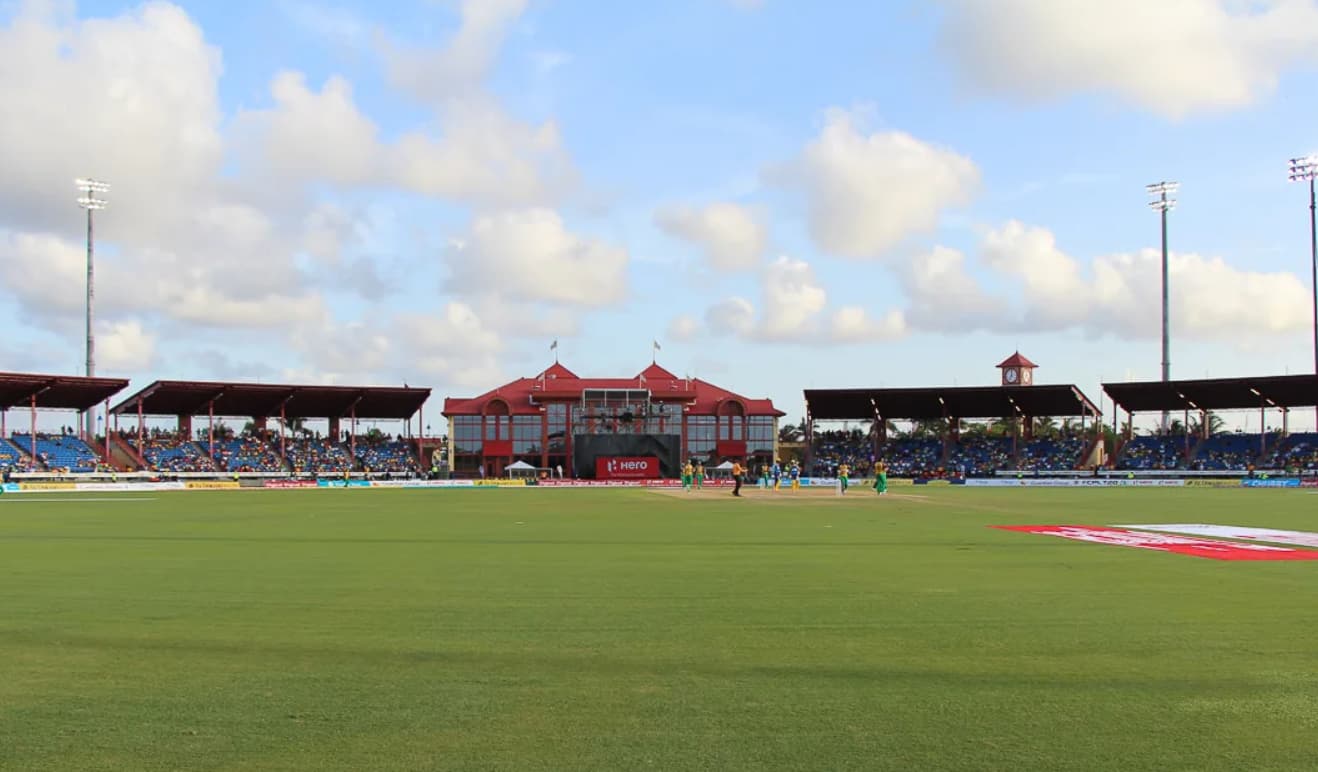
Why Lauderhill Matters in Modern International Cricket?
The United States has emerged as a neutral venue option for bilateral series and multi-nation tournaments.
Geographic positioning outside traditional cricket strongholds reduces home advantage concerns while expanding commercial opportunities.
ICC’s certification of Lauderhill validates the facility’s technical compliance with international playing standards.
This trust allows the venue to host World Cup fixtures and official T20I matches, affecting rankings and qualification scenarios.
Multi-nation tournaments benefit from North American venue inclusion due to time zone advantages for global broadcasting.
Matches scheduled in the United States reach Asian, European, and American audiences during accessible viewing windows.
Lauderhill’s role extends beyond hosting matches to demonstrating cricket’s viability in emerging markets.
Success at this venue influences future infrastructure investments and tournament allocation decisions across North America.
Central Broward Regional Park Stadium Turf Ground Pitch Report
| Early Overs Scoring Pattern | Pace vs Spin Effectiveness | Surface Wear Across Innings | Ball Grip & Bounce Consistency | Typical Par Score Range | Toss Decision Bias |
|---|---|---|---|---|---|
| High run rate, 8-10 per over achievable | Pace dominant early, spin controls middle/death | Progressive slowdown, grip increases after 10 overs | True bounce early, variable grip in death overs | 165-170 runs first innings | Bat first strongly preferred (69% win rate) |
The Central Broward Regional Park Stadium Turf Ground Pitch Report indicates teams require batting depth extending to position seven due to surface deterioration patterns.
Top-order acceleration during powerplay overs becomes critical before spin-friendly conditions emerge.
Bowling combinations should balance frontline pace options with multiple spin variations for middle-overs control.
Defensive totals around 160 prove competitive when spinners exploit surface wear, while attacking totals exceeding 180 require early powerplay dominance.
Teams chasing face compound pressure from slowing pitch conditions and scoreboard requirements simultaneously.
Central Broward County Cricket Stadium, Lauderhill, Florida – Capacity and Boundary Length
| Fixed Seating | Grass Berm Viewing Area | Match-Day Usable Capacity | Straight Hit Distance Requirement | Square Boundary Difficulty | Ground Shape Influence |
|---|---|---|---|---|---|
| 5,000 permanent seats | 15,000 standing capacity | 20,000 total spectators | 73-78 meters | 68-71 meters | Circular, uniform difficulty |
The Central Broward Regional Park Stadium Turf Ground Boundary Length dimensions favor placement of batting over aggressive six-hitting strategies.
Straight boundaries measuring 73-78 meters require clean connections and optimal launch angles for clearing ropes consistently.
Square boundaries at 68-71 meters offer a marginal advantage but still demand power generation beyond typical T20 venues.
The Central Broward Regional Park Stadium Turf Ground Capacity accommodates 20,000 spectators, creating moderate crowd pressure compared to larger international stadiums.
Risk-reward calculations shift toward rotating strike and finding gaps rather than boundary-dependent scoring.
Batters prioritizing placement over power maintain higher strike rates with reduced dismissal risk, given the Central Broward Regional Park stadium turf ground pitch report, boundary length, and capacity specifications.
Lauderhill Cricket Ground, Florida – Stats and Records
T20I Statistics at Central Broward Regional Park Stadium Turf Ground, Lauderhill
| Total T20Is | Wins Defending Targets | Successful Chases | Record Team Score | Lowest Completed Innings | Average Match Total |
|---|---|---|---|---|---|
| 13 matches | 9 victories | 4 victories | West Indies – 245/6 | New Zealand – 81/10 | 167 runs per innings |
Teams defending targets win nearly 70% of matches, indicating scoreboard pressure compounds chasing difficulties caused by surface deterioration.
Risk management during the second innings becomes critical as batters face dual challenges of required run rate acceleration and declining pitch quality.
The 164-run gap between the highest and lowest totals demonstrates surface variability depending on weather conditions and pitch preparation protocols.
Average match totals around 167 suggest conservative batting approaches often succeed over aggressive boundary-hunting strategies given longer boundary dimensions and progressive spin dominance.
FAQs
- Is this venue suitable for fantasy cricket picks?
Select top-order batters who capitalize on powerplay conditions before the surface slows down. Spinners gain value in middle and death overs when pitch wear creates grip and variable bounce. All-rounders with spin bowling capability offer dual utility, given surface characteristics favoring controlled bowling variations.
- Does boundary size reduce six-hitting frequency?
Yes, longer boundary dimensions require exceptional timing and power generation for consistent maximums. Batters average fewer sixes per innings compared to venues with shorter rope distances. Placement batting and rotational strike-rate management become more effective scoring methods.
- Which leagues validate this ground’s competitiveness?
The venue has hosted bilateral T20I series, the USA’s first ODI fixtures, and matches for the Global Cricket League. ICC certification and World Cup match allocation confirm the facility meets international playing and operational standards for competitive cricket.
Conclusion:
The Central Broward Regional Park Stadium turf ground pitch report, boundary length, and capacity provide essential preparation intelligence for international matches.
Teams ignoring venue-specific data face tactical disadvantages during critical tournament fixtures.
- Tactical Takeaway
Bat first when possible to exploit early powerplay conditions. Load squad with multiple spin options for middle-overs control as surface deteriorates progressively across innings.
- Selection Insight
Prioritize top-order batters capable of powerplay acceleration before the pitch slows. Include all-rounders with spin bowling capability to maximize utility during death-over phases when variations prove most effective.
- Why Teams Must Prepare Here
Longer boundaries and progressive surface wear create unique tactical challenges absent at typical T20 venues. Teams unfamiliar with Lauderhill’s specific conditions risk strategic miscalculation during squad selection and match execution phases.
About the Author