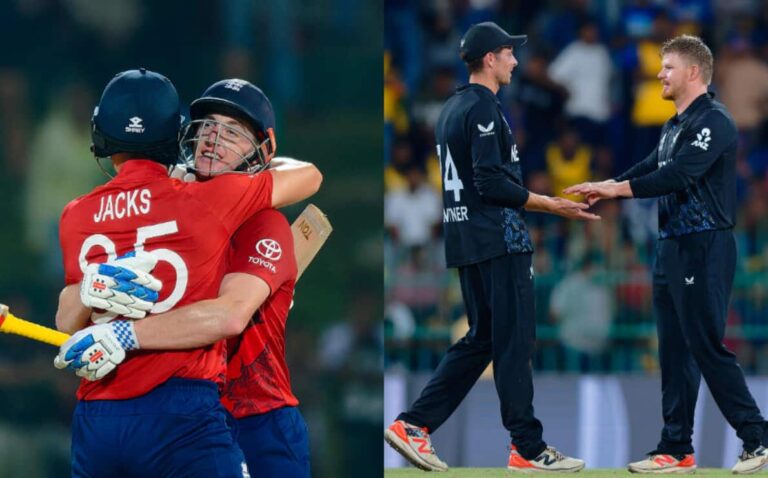
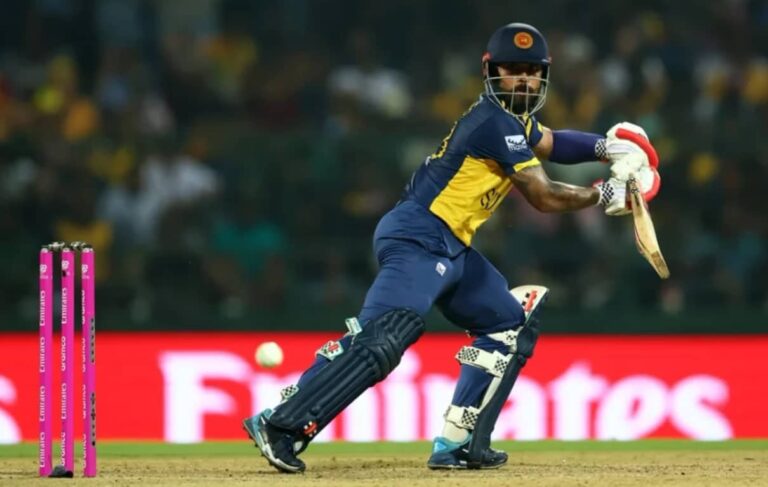
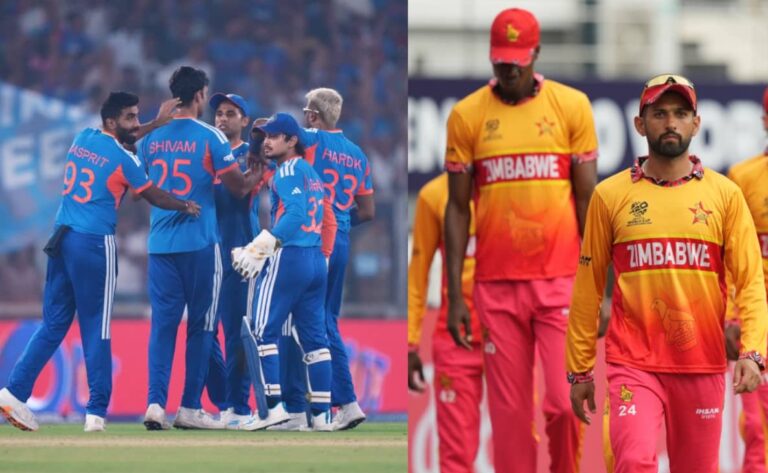
The Super Eight stage determines semi-final qualification through a condensed knockout format where every match carries elimination-level weight.
The ICC Men’s T20 World Cup 2026 super 8 points table operates under strict competition rules designed to ensure clarity in qualification and progression.
Eight teams compete across two groups with three matches each.
No points carry forward from the group stage, creating a complete reset that eliminates earlier tournament momentum advantages.
The format prioritizes competitive balance and decisive outcomes.
The top two teams from each group advance to the semi-finals scheduled for March 4 and March 5.
Net run rate becomes critical in the compressed three-match format.
ICC Men’s T20 World Cup 2026 Super 8 Points Table
Teams must balance aggressive scoring with defensive discipline across all fixtures to maintain qualification chances.
ICC Men’s T20 World Cup 2026 Super 8 Points Table: Super Eights, Group 1
| POS | TEAM | PLAYED | WON | LOST | N/R | TIED | Net RR | POINTS |
|---|---|---|---|---|---|---|---|---|
| 1 |  West Indies West Indies |
1 | 1 | 0 | 0 | 0 | +5.350 | 2 |
| 2 |  South Africa South Africa |
1 | 1 | 0 | 0 | 0 | +3.800 | 2 |
| 3 |  India India |
1 | 0 | 1 | 0 | 0 | -3.800 | 0 |
| 4 |  Zimbabwe Zimbabwe |
1 | 0 | 1 | 0 | 0 | -5.350 | 0 |
Early standings demonstrate significant net run rate volatility after single fixtures. South Africa’s commanding victory creates a substantial NRR advantage while India faces elimination pressure requiring dominant performances in the remaining matches.
ICC Men’s T20 World Cup 2026 Super 8 Points Table: Super Eights, Group 2
| POS | TEAM | PLAYED | WON | LOST | N/R | TIED | Net RR | POINTS |
|---|---|---|---|---|---|---|---|---|
| Q 1 |  England England |
2 | 2 | 0 | 0 | 0 | +1.491 | 4 |
| 2 |  New Zealand New Zealand |
2 | 1 | 0 | 1 | 0 | +3.050 | 3 |
| 3 |  Pakistan Pakistan |
2 | 0 | 1 | 1 | 0 | -0.461 | 1 |
| 4 |  Sri Lanka Sri Lanka |
2 | 0 | 2 | 0 | 0 | -2.800 | 0 |
Group 2 demonstrates how no-result matches complicate qualification mathematics with New Zealand and Pakistan sharing identical points but neutral NRR. England’s victory provides a two-point cushion while Sri Lanka faces must-win scenarios in the remaining fixtures.
T20 World Cup 2026 Super Eight Rules and Official Guidelines Explained
- Eight-Team Reset Format: All qualified teams begin the Super Eight stage with zero points regardless of group stage performance. This structural reset removes earlier tournament advantages and ensures complete competitive balance across knockout fixtures.
- Group Division Structure: Eight teams divide into two groups of four teams each. Each team plays exactly three matches within its designated group against the other three opponents during the Super Eight phase.
- Pre-Tournament Bracket Seeding: The ICC implemented pre-seeding framework before the tournament commenced, assigning certain teams to fixed bracket positions. This ensures venue certainty, broadcast scheduling stability, and commercial planning efficiency across India and Sri Lanka host venues.
- Replacement Team Protocol: If a pre-designated team failed to qualify for the Super Eight stage, the replacement team inherited that specific bracket slot. This maintains operational continuity and logistical planning established before the tournament began.
- Victory and Loss Points: Victories earn two points while losses earn zero points. The ICC Men’s T20 World Cup 2026 Points Table for Super 8 awards one point to each team in no-result scenarios where minimum overs cannot be completed.
- No Bonus Points System: Unlike certain league formats, the Super Eight stage awards no bonus points for batting or bowling performance benchmarks. Only match results determine points allocation across all fixtures.
- Five-Over Minimum Threshold: A minimum of five overs per side must be completed for a match to constitute a valid result. If fewer than five overs per side are possible due to weather interruptions, the match is declared no result.
- Weather-Affected Equity: In no-result scenarios, each team receives one point ensuring competitive fairness when weather prevents completing minimum required overs despite best efforts from match officials.
- Super Over Resolution: If a match ends in a tie after regulation overs, a Super Over is played immediately. If the Super Over also ends in a tie, additional Super Overs continue until a winner is determined.
- Decisive Outcome Requirement: There is no shared points scenario for tied matches once minimum overs are completed. Super Overs guarantee decisive outcomes in all completed fixtures eliminating drawn results.
- Points-First Ranking System: Teams rank based on total points first, followed by net run rate as the primary tiebreaker. Head-to-head results apply as tertiary criteria with ICC tournament regulations covering further separation if required.
- Net Run Rate Calculation: Net run rate proves critical given the condensed three-match format. Teams must manage scoring rates and defensive strategies carefully, as single dominant victories or heavy defeats significantly impact qualification chances.
- Top-Two Advancement: The top two teams from each Super Eight group qualify for semi-finals. Four teams total advance to knockout rounds scheduled for March 4 and March 5.
- Fixed Bracket Semi-Finals: There is no crossover reseeding beyond the predetermined bracket structure. Semi-final matchups follow fixed bracketing established before the tournament commenced, regardless of group finishing positions.
- India-Sri Lanka Host Venues: Super Eight matches are hosted across India and Sri Lanka venues. Venue allocation follows the ICC pre-assigned bracket system rather than dynamic assignments based on group stage finishing positions.
- Travel Predictability Benefits: This venue allocation system reduces travel unpredictability and ensures operational continuity for teams, broadcasters, and commercial partners throughout the knockout stages.
- Immediate Elimination Stakes: With no carried forward points, early Super Eight matches hold immediate elimination weight. Teams cannot rely on earlier tournament momentum to carry them through this condensed knockout stage.
- Squad Rotation Risks: Net run rate management creates tactical considerations in team selection and batting orders. Squad rotation risk increases due to tight scheduling across three matches, determining semi-final qualification.
FAQs:
- Q: How many teams play in the Super Eight stage?
A: Eight teams are divided into two groups of four teams each. Each team plays three matches within its designated group.
- Q: Are previous round points counted in the Super Eights?
A: No. All teams start with zero points regardless of group stage performance. This ensures competitive balance across Super Eight fixtures.
- Q: What happens if a Super Eight match is tied?
A: A Super Over is played immediately. If the Super Over also ends in a tie, additional Super Overs continue until there is a winner.
- Q: How many teams advance from each Super Eight group?
A: The top two teams from each group qualify for the semi-finals. Four teams total advance to the knockout rounds.
Conclusion:
The ICC Men’s T20 World Cup 2026 Super 8 points table determines semi-final qualification through a condensed knockout format, where every match result directly impacts tournament progression.
No points carry forward from the group stage, ensuring immediate elimination pressure from opening Super Eight fixtures.
Net run rate becomes decisive in the compressed three-match format.
Teams must balance aggressive cricket with calculated risk management across all departments.
- Semi-Finals: March 4 and March 5, 2026
- Final: March 8, 2026
The Super Eight stage represents cricket’s most intense knockout format, where historical tournament momentum provides no advantage and marginal net run rate differences often determine semi-final qualification between closely matched teams.
Also Check:
- ICC T20 World Cup 2026 Live Streaming
- ICC T20 World Cup 2026 Schedule
- How To Watch ICC T20 World Cup 2026 In India
- ICC T20 World Cup 2026 Commentators List
- ICC T20 World Cup Umpires 2026
- All Teams Squads for Men’s T20 World Cup 2026
About the Author