Most cricket fans know the tea break exists. Fewer know exactly how it works.
When does it happen? Can it be moved? How long is it really?
And why is it still called a tea break in an era of sports science and compression gear?
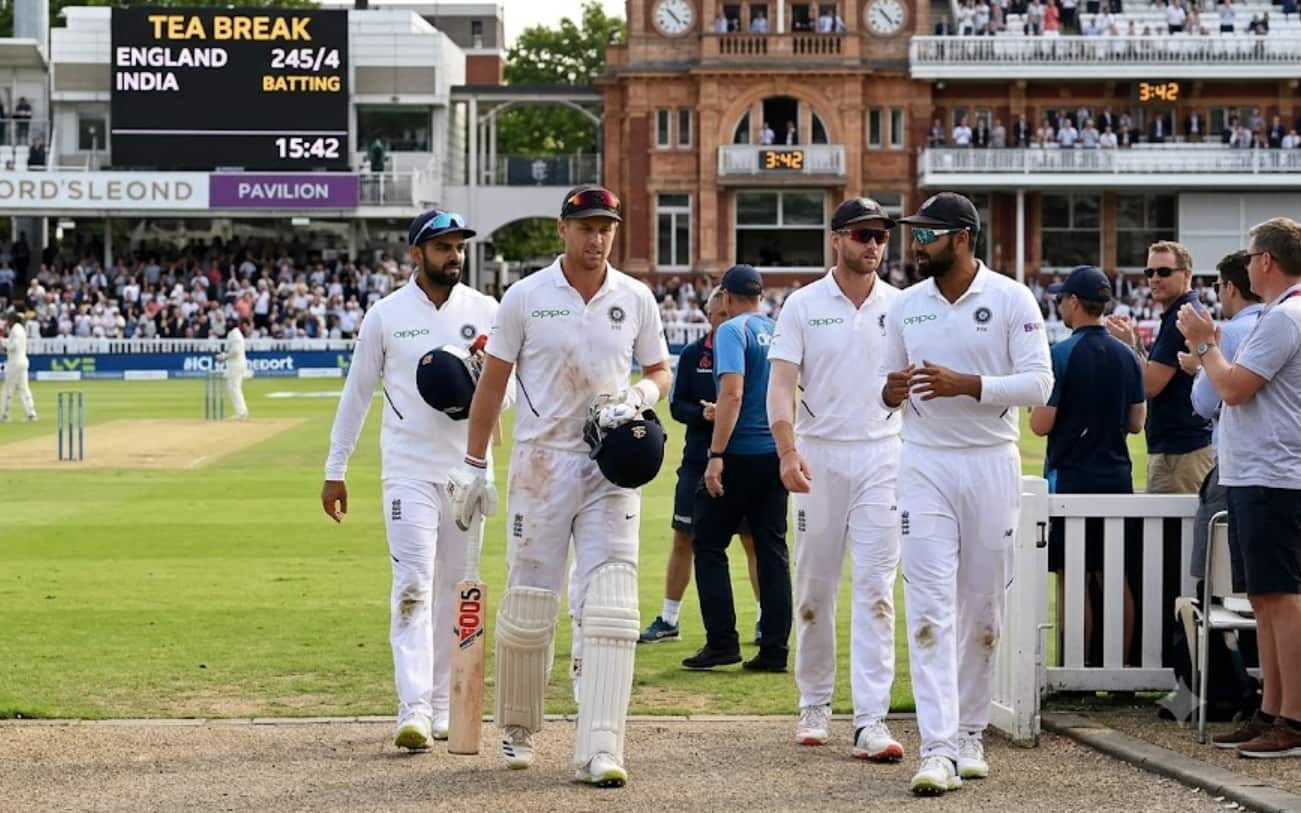
Tea Break Time in Test Cricket
This article answers all of it — plainly and completely.
The Basic Facts: How Long Is the Tea Break?
Tea break time in Test cricket is 20 minutes.
It falls after the second session of each day’s play, making it the shorter of the two daily intervals.
The lunch break, which separates the first and second sessions, runs for 40 minutes.
So in simple terms, a standard Test match day looks like this:
| Session | Duration | Break |
|---|---|---|
| First session | ~2 hours | Lunch – 40 mins |
| Second session | ~2 hours | Tea – 20 mins |
| Third session | ~2 hours | Stumps |
The exact clock timing of the tea break depends on the start time of play that day.
In India, where Tests typically begin at 9:30 AM IST, tea generally falls around 3:40–4:00 PM, subject to any stoppages.
When Exactly Is Tea Taken? The Scheduling Rules
This is where it gets slightly more nuanced than most people expect.
The tea break isn’t always taken at a fixed clock time. Its placement depends on the state of play at the scheduled moment. Under the Laws of Cricket:
- If a wicket falls within 30 minutes of the scheduled tea, the umpires can take the break at that point. This prevents a new batter from having to walk out, face a single ball, and then immediately head back in.
- If a team is 30 minutes into a session and the break hasn’t been signalled, umpires have discretion to delay it slightly — for instance, to allow an over to complete.
- Rain and bad light complicate things further. If earlier stoppages have shortened the day significantly, match officials can consolidate sessions or push tea to a later slot to recover overs. In extreme cases, the tea interval can be absorbed into a longer playing block.
None of this changes the 20-minute duration once the break actually begins. That stays fixed.
A Quick History of the Tea Interval
Cricket’s tea break is older than Test cricket itself.
The tradition came from English club cricket in the 1800s, where afternoon tea was a standard part of social life.
As matches ran through the afternoon, players and spectators alike expected a pause for tea and refreshments. It was as much a social convention as a sporting necessity.
When international Test cricket took shape — England vs Australia from 1877 onwards – the break carried over naturally.
By the early 20th century, it was codified in cricket’s laws and had spread across every Test-playing nation, regardless of whether afternoon tea was part of their own culture.
Today, the MCC (Marylebone Cricket Club), which owns the Laws of Cricket, formally defines the tea interval as part of the structure of a playing day. What started as a British social habit is now a global rule.
What Actually Happens During the Tea Break?
For players, it’s 20 minutes of recovery work.
Batters who have been in the middle for hours will rehydrate and receive physio attention.
Bowlers rest their shoulders. Captains debrief with coaches.
The team talks that happen during tea are often underestimated.
A side two wickets away from a breakthrough, or a batting team defending a lead, can use this window to reset their entire approach.
Several famous Test turnarounds — sessions where a team came back completely transformed — followed a tea break.
For fans watching at home, it’s a natural pause point.
In India, especially, it often lines up with the post-lunch period at home, making it one of the more watched breaks of the day.
Tea Break Rules in Day-Night Tests
Day-night Tests, introduced in 2015, adjusted the break structure to suit evening audiences.
Because play runs into the night under floodlights, the traditional session timings shift.
The break that would normally be called tea in a daytime Test is instead called a dinner break in many day-night fixtures.
The second interval — which falls later into the evening — takes the role tea typically plays.
The names change. The 20-minute duration and function stay the same.
India played its first day-night Test in November 2019 against Bangladesh at Eden Gardens, Kolkata.
The match used the adjusted interval structure with a dinner break in place of the traditional tea.
No Tea Break in T20s and ODIs — Here’s Why
Shorter formats simply don’t need it.
A T20 match runs for roughly three and a half hours total. An ODI takes six to seven hours but only has one innings break.
Neither format has a session structure requiring a mid-afternoon pause.
The closest equivalent in limited-overs cricket is the drinks break, which happens on the field, lasts about five minutes, and is primarily for hydration.
There’s no strategic retreat to the dressing room, no team talks, no 20-minute rest.
Tea breaks belong to Test cricket specifically because Test cricket is the only format with long enough sessions to make a second daily interval necessary.
Tea Break Duration vs. Other Cricket Breaks
For anyone tracking how Test match time is structured:
| Break Type | Duration | When |
|---|---|---|
| Lunch | 40 minutes | After 1st session |
| Tea | 20 minutes | After 2nd session |
| Drinks (Test) | ~5 minutes | Mid-session, on the field |
| Innings break (ODI) | 10–45 minutes | Between innings |
| T20 innings break | 10–20 minutes | Between innings |
The tea break is the shortest of the major scheduled breaks in Test cricket, but it’s also the one with the most tactical weight – it comes right before the final push of the day.
Frequently Asked Questions
- How long is the tea break in Test cricket?
The tea break lasts exactly 20 minutes. It is shorter than the lunch break, which runs for 40 minutes.
- Can the tea break be delayed or cancelled?
Yes. If play has been heavily interrupted by weather, umpires can reschedule or absorb the tea break to recover overs. A wicket falling near the scheduled tea time can also prompt an early or slightly delayed break.
- What time does the tea break happen in Indian Test matches?
It typically falls around 3:40–4:00 PM IST in Tests starting at 9:30 AM, but the exact time shifts depending on interruptions during the day.
- Is the tea break different in day-night Tests?
The name changes — it becomes a “dinner break” in some day-night fixtures — but the 20-minute duration remains the same.
- Why is it called a tea break?
The name comes from English cricket tradition. In 19th-century England, afternoon tea was a standard social ritual, and cricket matches adopted the pause as part of their daily schedule. The name stuck even as Test cricket spread globally.
- Do ODI and T20 matches have a tea break?
No. Only Test cricket has a tea break. Shorter formats have drinks breaks on the field and an innings break, but no structured 20-minute interval mid-innings.
Conclusion:
Tea break time in Test cricket lasts 20 minutes, falls after the second session, and has been part of the game since the 19th century.
The rules around it are flexible enough to handle rain delays and match situations, but the duration itself is fixed.
It’s a small part of the day’s structure, but it shapes how sessions are contested, how captains plan, and how fans follow the rhythm of a Test match.
Understanding it properly means understanding how a day of Test cricket actually works — not just in theory, but ball by ball.
Also Check:
About the Author